
His treatment rectal cancer from squamous cells is primarily by radiation and chemotherapy and secondarily by surgery. In this way, the sphincter is preserved, whereas, on the contrary, the operation usually leads to a permanent colostomy. Early diagnosis and staging are important for planning the right treatment. No surgical intervention should be performed if staging is not performed first because the area is altered and the rest of the tests are not reliable.
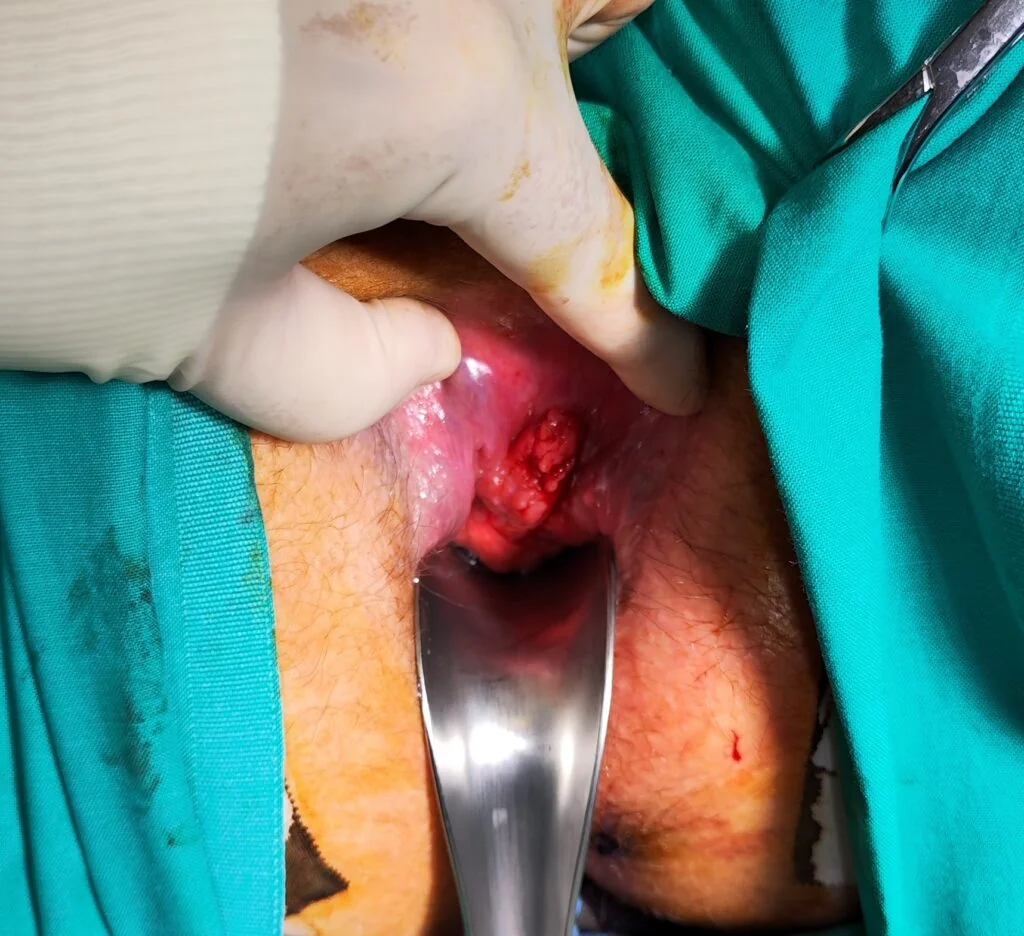
Squamous cell rectal cancer (or rectal squamous cell carcinoma) is a relatively rare type of cancer that occurs in the anus, specifically in the epithelium that covers the anatomical area around the anal canal.
Risk Factors:
- HPV infection (mainly types 16 and 18)
- Sexual activity (especially unprotected anal intercourse)
- Smoking
- Immune system suppression (eg HIV, immunosuppressive therapy)
- History of precancerous lesions (such as AIN – Anal Intraepithelial Neoplasia)
Symptoms:
- Bleeding from the anus
- Pain or discomfort in the anus
- Sensation of a "mass" or lump
- Itching or skin changes around the anus
- Discharges or changes in bowel habits
Diagnosis:
- Palpation / digital examination
- Proctoscopy / sigmoidoscopy
- Biopsy
- Imaging tests (CT, MRI, PET scan for staging)
Treatment:
Treatment depends on the stage of the disease and the condition of the patient. It usually includes:
- Radiotherapy + Chemotherapy (combination) – first-line treatment for locally advanced disease.
- Surgery – only if there is no response or in recurrence.
- Immunotherapy / Targeted therapy – in metastatic stages or relapses.
Forecast:
- It depends on the stage at diagnosis.
- Early detection offers excellent chances of cure.
- Five-year survival ranges from ~70–90% in early stages.