
Diverticulitis, causes, symptoms, conservative or surgical treatment
Diverticular disease is a common problem of the colon in modern societies due to the "modern" lifestyle and diet. It is a benign condition, but it can cause some very serious complications that we should be aware of.
What is a diversion?
A diverticulum is a pouch-like swelling in the muscle wall of the colon, particularly at points where blood vessels enter. Diverticular disease is a common problem that affects men and women equally. The risk of diverticulitis increases with age and is more common in developed countries.
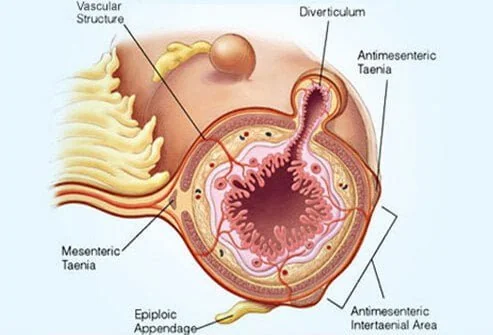
Diverticulosis, Diverticulitis
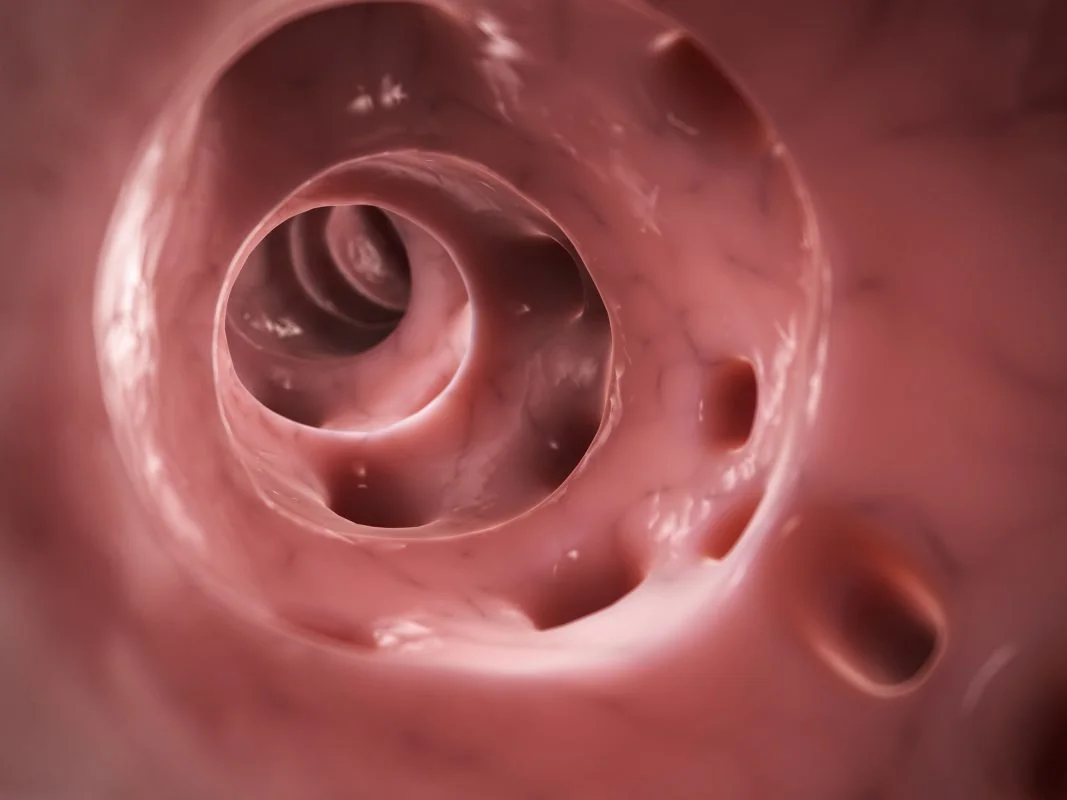
- Diverticulosis : Is the presence of diverticula in the large intestine, often found incidentally with an examination done for another reason, such as a colonoscopy or barium enema. Most people with diverticulitis have no symptoms and will not experience any problems for the rest of their lives. 30% of people over 50, 50% over 60 and 75% over 80 have diverticulitis in their bowel.
- Diverticulitis: It is the inflammation of a diverticula (diverticulitis) and occurs when there is thinning of its wall, disturbance of its blood supply or its blockage. The cause is usually constipation due to the increased pressures created in the intestine.
Diverticulitis Risk Factors
- Obesity
- Smoking
- Sedentary life
- Increased meat consumption in relation to plant fiber
- Anti-inflammatory drugs, opioid
- Common factors that cause constipation
Symptoms of Diverticulitis
- The symptoms of diverticulitis depend on the degree of inflammation. The most common symptom is pain in the lower left abdomen. Other symptoms may include nausea and vomiting, constipation, diarrhea, fever, and urinary symptoms.
- Diverticulitis is distinguished in simple and complicated form.
- Simple diverticulitis, which accounts for 75% of cases, is not associated with complications and usually responds to medical treatment without surgery.
- Complicated diverticulitis occurs in 25% of cases and usually requires surgery.
Complications of Diverticulitis
- Complications associated with diverticulitis may include the following:
Bleeding from a Diverticulum
- Bleeding from a diverticulum occurs when the artery located in the diverticulum ruptures inside the intestine. It happens in about 10% of cases especially when there is constipation.
- Bleeding is usually painless, and the color of the stool is bright red or purple. Blood in the stool is an indication of various diseases, from Hemorrhoids up to cancer so we must always consult our doctor.
- Fortunately, most cases of bleeding stop on their own without the need for surgery.
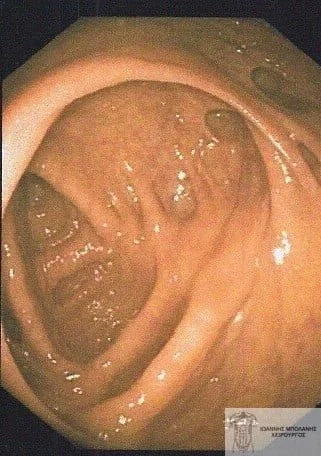
Diverticular how is the diagnosis made?
The diagnosis is usually made incidentally during examination of the bowel or abdomen for other reasons. Tests used to find diverticula are:
- Barium enema
- Colonoscopy, sees the diverticula
- Computed tomography is mainly used to diagnose diverticulitis and its complications
Prevention and Treatment
Prevention for Diverticulitis Diverticulitis
People with diverticulitis who have no symptoms do not need treatment. As a precaution, most doctors recommend increasing fiber in the diet, which can prevent the development of new diverticula, diverticulitis, or diverticular bleeding. However, fiber has not been shown to prevent these complications.
- Increase fiber by eating more fruits and vegetables
- Seeds and nuts are advised to be avoided as they could trigger an attack of diverticulitis. However, this has not been proven either.
Treatment for Diverticulitis
Treatment of diverticulitis depends on how severe the symptoms are.
- Treatment at home – if the symptoms are mild eg mild abdominal pain (tolerable, usually lower left abdomen, high fever, you can recover at home with a liquid diet (eg broth, water, chamomile) and oral antibiotics. If you develop any severe symptom such as fever >38 ° C, increase in pain, vomiting etc you should seek immediate medical help:
- Hospital treatment : If you have moderate to severe symptoms, you should be hospitalized for treatment. During this time, you are not allowed to eat or drink, antibiotics, painkillers and fluids are given intravenously.
- If you develop an abscess or blockage in your colon, you may need to drain the abscess, usually with a CT scan or surgery.
Surgical Treatment for Diverticulitis
Emergency Operation Perforation - Fasciitis
- Surgery: If you get peritonitis, you will need emergency surgery which usually has two stages (Hartmann's operation). The first surgery involves the removal of the affected colon and the creation of a colostomy. A colostomy is an opening in the skin through which waste from the bowel is expelled into a bag. About three months later, a second surgery is performed to reconnect the two parts of the colon and close the opening in the skin so you can act normally again.
Non-Urgent Surgery Scheduled
- In non-emergency cases the diseased part of the colon can be removed and both ends reattached in one surgery without the need for a colostomy. This is usually done when diverticular surgery is planned.
- Surgery may not be necessary if you improve with conservative drug therapy.
- Therefore, surgery is recommended for patients with repeated episodes of diverticulitis or its serious complications.
Some studies recommend surgery if the first episode of diverticulitis is at a young age under 40-50 years, because the disease can be more severe in this age group. The operation can be performed laparoscopically or open.
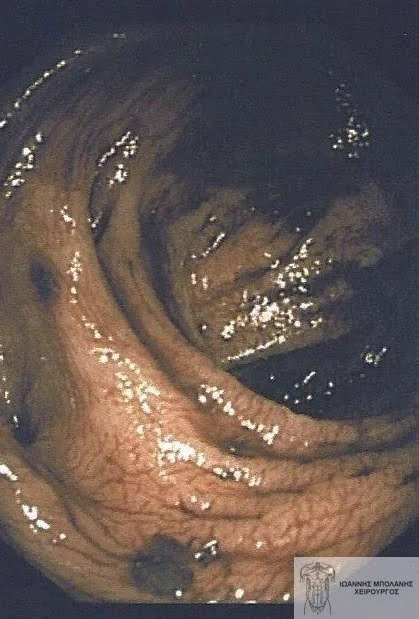
After an episode of diverticulitis, the entire colon should be examined by colonoscopy to determine the extent of the disease and rule out the presence of other lesions, such as polyps or o Cancer.
Bleeding Treatment
Most cases of bleeding stop on their own. However, some patients will need further treatment to stop the bleeding, such as colonoscopy, angiography with or without embolization, or surgery.
Classification of Diverticulitis
The classification of acute diverticulitis is based on the criteria Hinchey Classification and is based on the findings of the CT scan where the therapeutic approach and treatment of the diverticulitis is determined based on them
- Stage 1a: Inflammation
- Stage 1b: Pericolic or mesenteric abscess (near the diverticulum)
- Stage 2: Abscess in the pelvis or generally in the abdomen (distant)
- Stage 3: Generalized purulent peritonitis
- Stage 4: Generalized fecal peritonitis
Stage 1 can usually be treated conservatively with antibiotics. Stage 2 sometimes conservatively with axillary puncture or surgically. Stages 3-4 require urgent surgical treatment.
Diversions Prognosis and Statistics
About 15 – 25% of people with diverticulitis will develop diverticulitis, while 5 – 15% will experience diverticular bleeding.
About 85% of people with simple diverticulitis will respond to drug therapy, while 15% of patients will need surgery.
After successful treatment of the first episode of diverticulitis,
- One third of patients will remain asymptomatic,
- One third will have episodes of mild pain without diverticulitis
- And a third will have a second episode of diverticulitis
The prognosis is worse after a second episode of diverticulitis. The rate of complications reaches 60% while only 10% will remain free of symptoms.
Absolute Indications for Surgery
These are situations that require urgent or immediate surgery:
- Generalized peritonitis (Hinchey stages III–IV): Suppurative peritonitis Fecal peritonitis
- Uncontrolled sepsis despite antibiotics and drainage
- Failure of percutaneous drainage of an abscess
- Persistent, uncontrolled diverticular bleeding (rare but serious)
- Free perforation with diffuse infection in the abdomen
Related Indications
Surgery may be planned after the acute episode has subsided:
- Complicated diverticulitis : Recurrent abscess Fistula formation (Colo-cystic, Colo-vaginal, Colo-intestinal, Colo-cutaneous) Stenosis or obstruction
- Recurrent diverticulitis: Traditionally after ≥2 episodes, but today the decision is individualized based on severity, age, comorbidities, and patient preference
- Chronic/persistent diverticulitis with constant pain and significant reduction in quality of life
- Younger patients (no longer an absolute indication, but discussed in recurrent or severe cases)
Factors Affecting the Decision
- Co-morbidities immunosuppression, renal failure, chronic cortisone therapy, diabetes mellitus
- The severity of each episode and not just the number of recurrences
- The impact on everyday life and quality of life
- Imaging findings (persistent thickening, stenosis, suspicious findings)