
Perianal Abscess Symptoms Treatment Antibiotic
The periodic abscess is an inflammation in the area around the anus, which is often the initial manifestation of a periodical Fistula. Although the treatment of the perineal abscess is usually a simple opening (drainage), the treatment of the perineal fistula that it creates can be extremely difficult, and where and how the abscess is opened plays a role. So even the simple operation of an abscess should be done by specialized anal surgeons.
Classification of Perianal Abscess
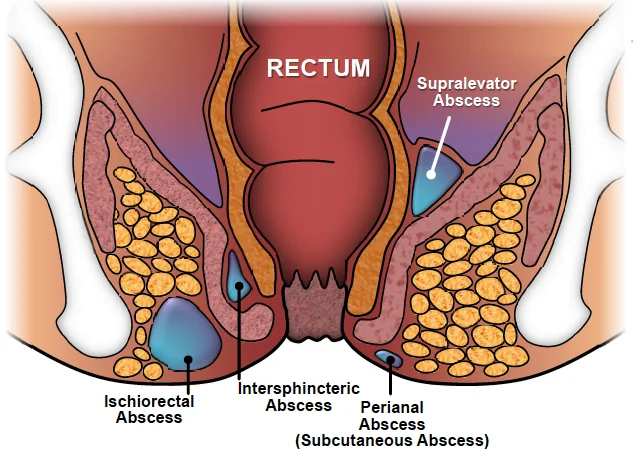
According to the spaces resulting from the anatomical arrangement, 4 types of rectal abscess can be distinguished:
1. Perianal abscess
2. Rectal abscess
3. Transsphincteric abscess
4. Supralevator abscess
This distinction is important and must be made before any intervention as both the clinical picture and the treatment may differ from case to case.
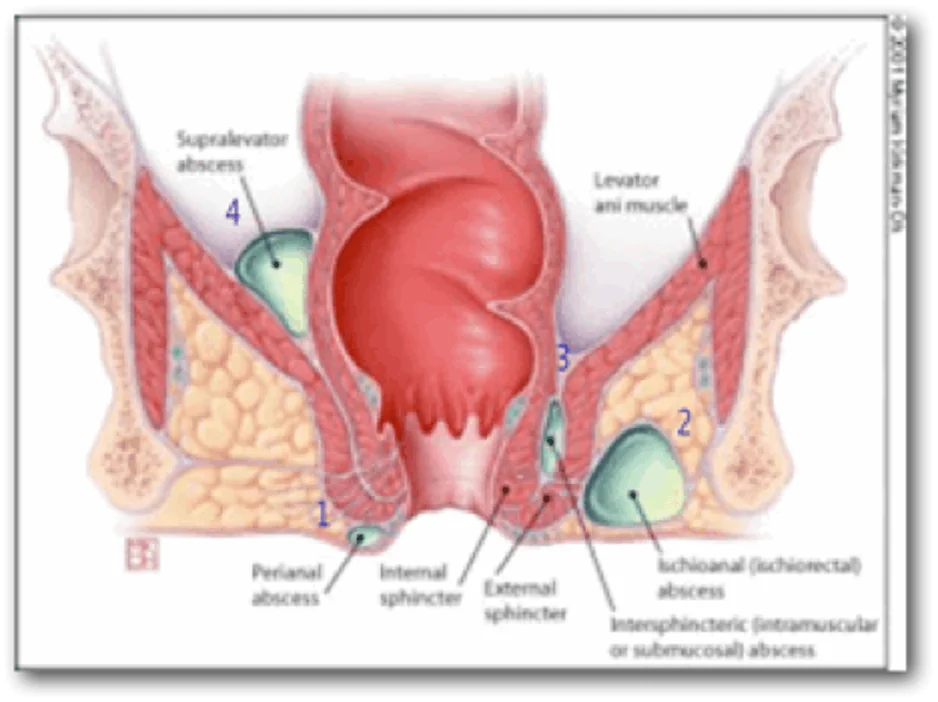
The diagnosis of a perianal perianal abscess (the most common form of abscess) is usually not difficult, since it manifests as a superficial, visible, painful swelling in the anus, accompanied or not by systemic septic phenomena (fever, leukocytosis). The pain worsens with bowel movements and sitting. Clinical examination reveals a reddened area with hardness, tenderness, and sometimes tingling.
A euthyschial abscess is usually larger as it extends towards the "endodontic" fatty tissue, which abounds in the euthyschial fossa, while at the same time it may present with fewer clinical signs, compared to a perianal abscess.
The existence of dysuric disturbances indicates the existence of a transsphincteric or supralevator abscess. In particular, the transsphincter can cause intense discomfort and mainly pain even though it is small in size.
Imaging and diagnosis of perianal abscess
The diagnosis of abscess is clinical in most cases. However, in cases where the clinical signs are disproportionate to the symptoms, imaging methods can offer significant help. Two methods contribute to the visualization of rectal inflammation: Intrarectal ultrasound and magnetic resonance imaging.
Endorectal ultrasound offers the possibility both of diagnosing the existence of an abscess in cases where there is clinical doubt, and of locating it in terms of the sphincter mechanism. However, it is not considered a necessary test, since in most cases the diagnosis is easily made with the clinical examination.
MRI provides generally the same information, but is considered more sensitive for detecting deep abscesses in the rectal fossa and over the levator muscles than endorectal ultrasound.
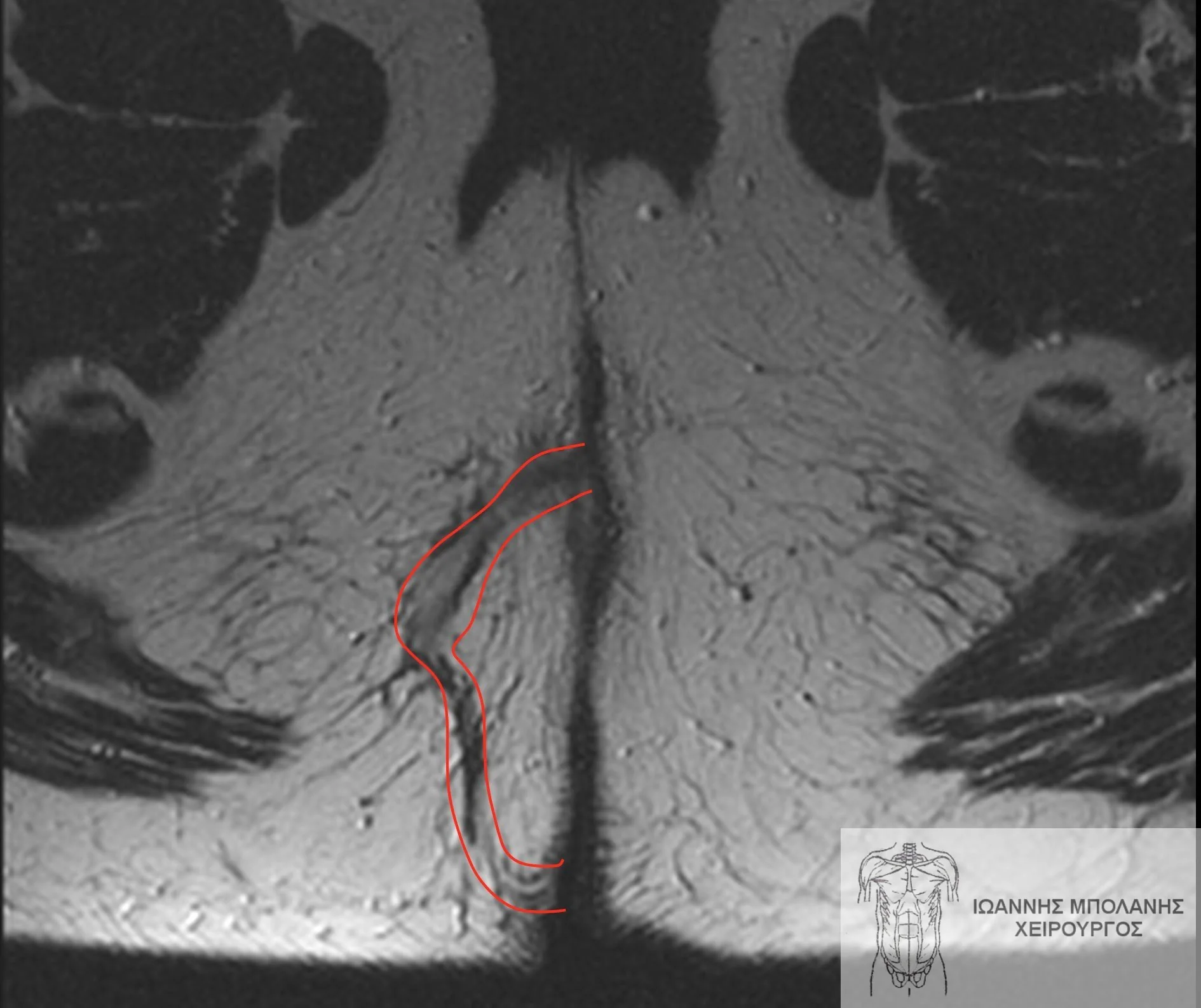
These same tests are also used to map and locate fistulas in the area that either coexist or develop after an abscess.
Treatment of Perianal Abscess
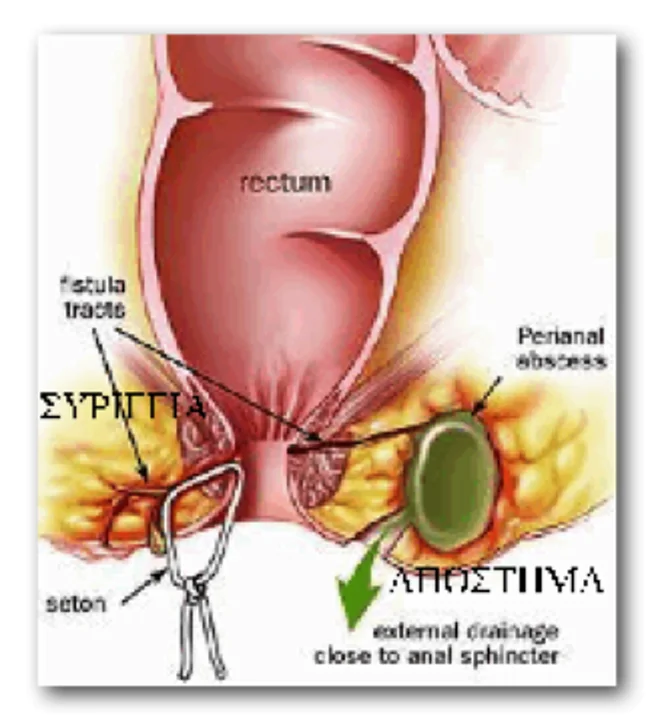
The therapeutic treatment of an rectal abscess consists of opening and draining it (as is the case for most abscesses). Perianal and rectal abscesses it is possible to drain them with local anesthesia on an outpatient basis, but it is usually done under general anesthesia both because of the pain and to better control the area in case of coexisting pathological conditions. The drainage incision must be performed as close as possible to the anal ring and not necessarily at the point of greatest ecstasy (point of maximum swelling) so that if a fistula is formed later, its course is shorter (i.e. it is shorter) thus facilitating its surgical treatment. He was watching Video.
It is important that the puncture site remains open for a sufficient period of time in order to achieve complete drainage of the abscess. This is possible by performing an elliptical incision or a cross incision with removal of the corners of the skin. Nevertheless, adequate drainage means keeping the incision open and not necessarily making a large incision. The use of drains is rarely necessary, and the placement of gauze pads often prevents drainage. Treatment of large or "shoe-shaped" abscesses requires general anesthesia and possible additional incisions on either side to cover the entire extent of the abscess cavity.
Antibiotic for Perianal Abscess
The role of antibiotics should be considered ancillary and the indications for their administration should be limited to the following cases: A) heart valvular disease, b) diabetes mellitus c) immunosuppression, d) extensive regional inflammation (cellulitis) or e) presence of a prosthesis (foreign materials implanted in the body). The initial administration of antibiotics with the aim of waiting for the appearance of an area of shock is likely to be dangerous, as it may lead to an extension of the inflammatory process through the above-mentioned anatomical levels.

Difficult Perianal Abscess
The treatment of supralevator abscesses is the most complex and depends on the initial origin. If this concerns the transsphincteric space, drainage should be attempted through the rectum, as drainage through the ischial fossa may lead to a suprasphincteric fistula. On the contrary, if the origin concerns the euthyschial fossa then transrectal drainage should be avoided because in this way the creation of an extrasphincteric fistula is possible. Finally, if the origin concerns the pelvis, then it is possible to drain it rectally, transmurally or through the ischial fossa. Computed tomography plays an important diagnostic and therapeutic role in the treatment of these cases.
The drainage of a rectal abscess is followed by recurrence or fistula formation in 37-50%, and this is because drainage is not an etiological treatment of this disease. However, these percentages are clearly lower in the case of perianal abscesses, compared to the rest. It has been suggested to perform a primary syringotomy after finding the intraluminal communication, simultaneously with drainage of the abscess to avoid future fistula formation.
Perianal or Perianal Abscess Conclusion
The periodical abscess it is the best known and most frequent of a series of abscesses in the region of the rectum and anus. It usually occurs without any previous pathological cause and is characterized by severe pain and swelling near the anal ring. Its treatment is surgical by opening and draining the pus. Despite the healing of the abscess, a fistula is often created in this area, which will also require surgical treatment in a second stage. Special attention is needed in the treatment of both abscess as well as later Fistula due to their proximity to the clamp to avoid danger incontinence.