
Hemorrhoids: Treatment, Causes, Symptoms & Prevention
Next we will describe what hemorrhoids are,
- The causes
- The symptoms
- How do we prevent
- How we can minimize the pain
- About the complications of the operation and how to avoid them
And we will analyze all the techniques, old (scalpel, expansion) and new (laser, ultrasound, etc.). Read about the new treatment…

What are hemorrhoids?
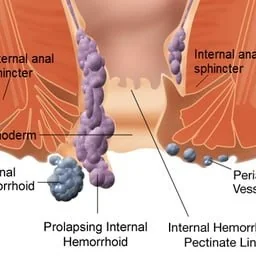
Hemorrhoids are a set of arteries and veins located in the anus and are normal structures of our intestine. Hemorrhoids help with normal bowel function and continence.
There are two types of hemorrhoids. External hemorrhoids located outside the sphincter (anus) and internal hemorrhoids located inside the sphincter.
- External hemorrhoids are located outside the anus. They are not visible unless they swell or clot.
- Internal hemorrhoids are located inside the intestine and participate in the continence mechanism. Hemorrhoidal disease occurs when the tissue that supports internal hemorrhoids loosens (mechanical factors) when blood flow to the area is disrupted (hemodynamic factors)
Symptoms of Hemorrhoids
Hemorrhoiditis appears with the following symptoms:
- Bleeding – blood in the stool : Blood loss usually occurs towards the end of the bowel movement. In advanced cases, bleeding may occur automatically, without voiding. Blood is usually bright red in color and coats the stool, we also see it on the bowl and on the paper. If the blood is mixed with the stool and is dark in color then it is probably not from the hemorrhoids. Blood loss can cause iron deficiency anemia.
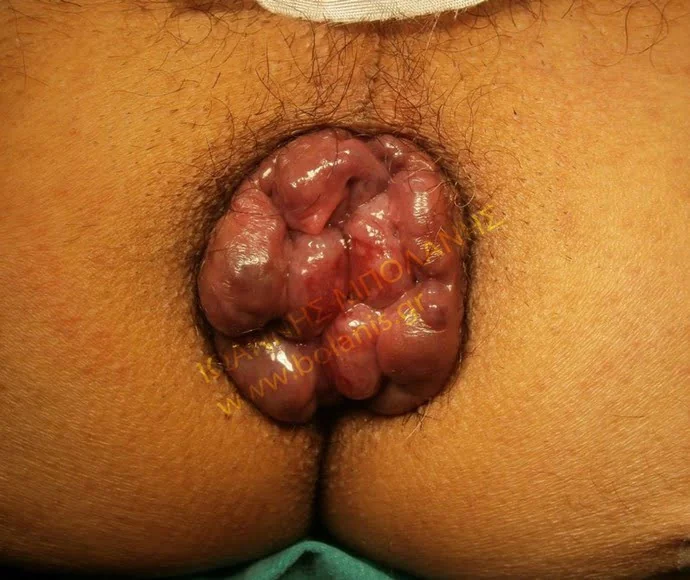
- Prolapse: When internal hemorrhoids increase in size and appear outside the anus after bowel movement, this is called prolapse. Hemorrhoids are classified based on the degree of prolapse, see below. Swelling of hemorrhoids causes a feeling of heaviness, pressure, incomplete bowel movement and straining.
- Discharge – Itching : Hemorrhoids produce mucous discharge that causes anal irritation and itching. Often a vicious cycle is created as the itch causes us to rub the area resulting in micro-injuries that increase the itching.
- Pain: Internal hemorrhoids usually do not cause pain. The presence of pain in the anus area is usually due to a clotted external hemorrhoid, Anal fissure, Perianal abscess or rarely in a tumor of the anus that can infiltrate the nerves of the area.
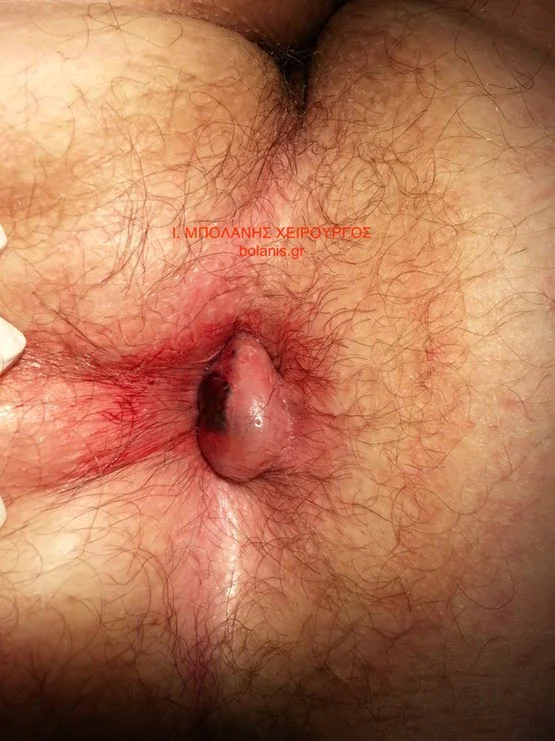
Thrombosis of External Hemorrhoid
Thrombosis of an external hemorrhoid causes significant pain that lasts 24 hours. There is a palpable hard mass at the entrance of the anus that causes pain when touching or sitting on it. It is usually treated conservatively with appropriate medication and patience. In a few days the clot is absorbed by itself and the symptoms subside.
In patients with very severe pain, either resection of the clotted hemorrhoid is performed, or opening and removal of the clot, with immediate relief of symptoms.
Classification of internal hemorrhoids (stages or grades).
Hemorrhoids are classified into four grades (stages).
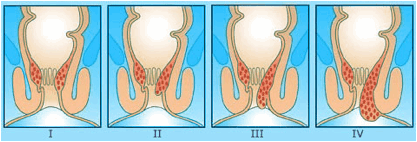
- 1st Degree: Hemorrhoids with slightly increased size, without prolapse but with blood loss during bowel movements.
- 2nd Grade: Hemorrhoids with a larger size than 1st Grade, small prolapse that automatically resets in a few minutes, there is blood loss during bowel movements, we may also have discharge and itching.
- 3rd Grade: Hemorrhoids larger than 2nd Grade with more intense symptoms and with the main characteristic that the prolapse does not reposition itself but needs to be helped with the hand.
- 4th Degree: Hemorrhoids larger than 3rd Degree and with the main characteristic that the prolapse is not repositioned even by hand. The hemorrhoids are now permanently out.
The symptoms of hemorrhoids are mainly triggered by disorders of the intestinal function. Constipation and staying on the toilet for more than 5-10 minutes, diarrhea, pregnancy and childbirth and other conditions can make hemorrhoids worse.
It is certain that prolonged standing or sitting, stress, the use of alcohol and spices, the patient's temperament and hereditary factors aggravate the condition of hemorrhoids.
Diagnosis of hemorrhoidal disease.
To establish the diagnosis of hemorrhoids, we must examine them. The diagnosis is made by clinical examination and proctoscopy or colonoscopy. In patients over 40-45 years of age, a colonoscopy should be performed to rule out other serious diseases. In general, the doctor must check whether the hemorrhoids are really the cause of the bleeding.
SOS: For any change in our stools – whether it is blood, or mucus, or the appearance of sudden constipation or even diarrhea – that persists beyond a few days, we should visit a specialist and not always attribute them to hemorrhoids. These symptoms are also caused by other benign or malignant diseases, ulcerative colitis, Crohn's disease, polyps, diverticulitis, Bowel cancer, rectal cancer.
Prevention and Treatment of Hemorrhoids
- Prevention of hemorrhoids by: Increasing fiber in the diet (green vegetables, grasses, psyllium, whole grain cereal products, etc.) reducing foods that can act as irritants (spices, alcohol, caffeine) increasing fluid intake physical exercise (movement) regulating bowel movements on a daily basis
- Treatment Hemorrhoids:
- Preservatives using medications such as topical ointments, suppositories, or pills
- Surgically with techniques analyzed below with a predominant laser Laser Hemorrhoidoplasty (LHP®) LHP®-RAR method
The techniques differ from each other in terms of indications - contraindications, as well as advantages - disadvantages. Therefore, the choice of method is adapted to the needs of the patient and after discussion with the specialist surgeon.
Hemorrhoids new minimally invasive methods of surgical treatment with laser or ultrasound
In recent years, several new techniques have been developed for the treatment of hemorrhoids that minimize pain and postoperative complications. The new generation laser and ultrasound help us restore the normal function of the bowel and sphincter, correcting both bleeding and prolapse and relaxation of the area. It is enough to contact a specialist doctor.
1) Hemorrhoids laser treatment Laser Hemorrhoidoplasty (LHP®), LHP® and LHP®-RAR methods
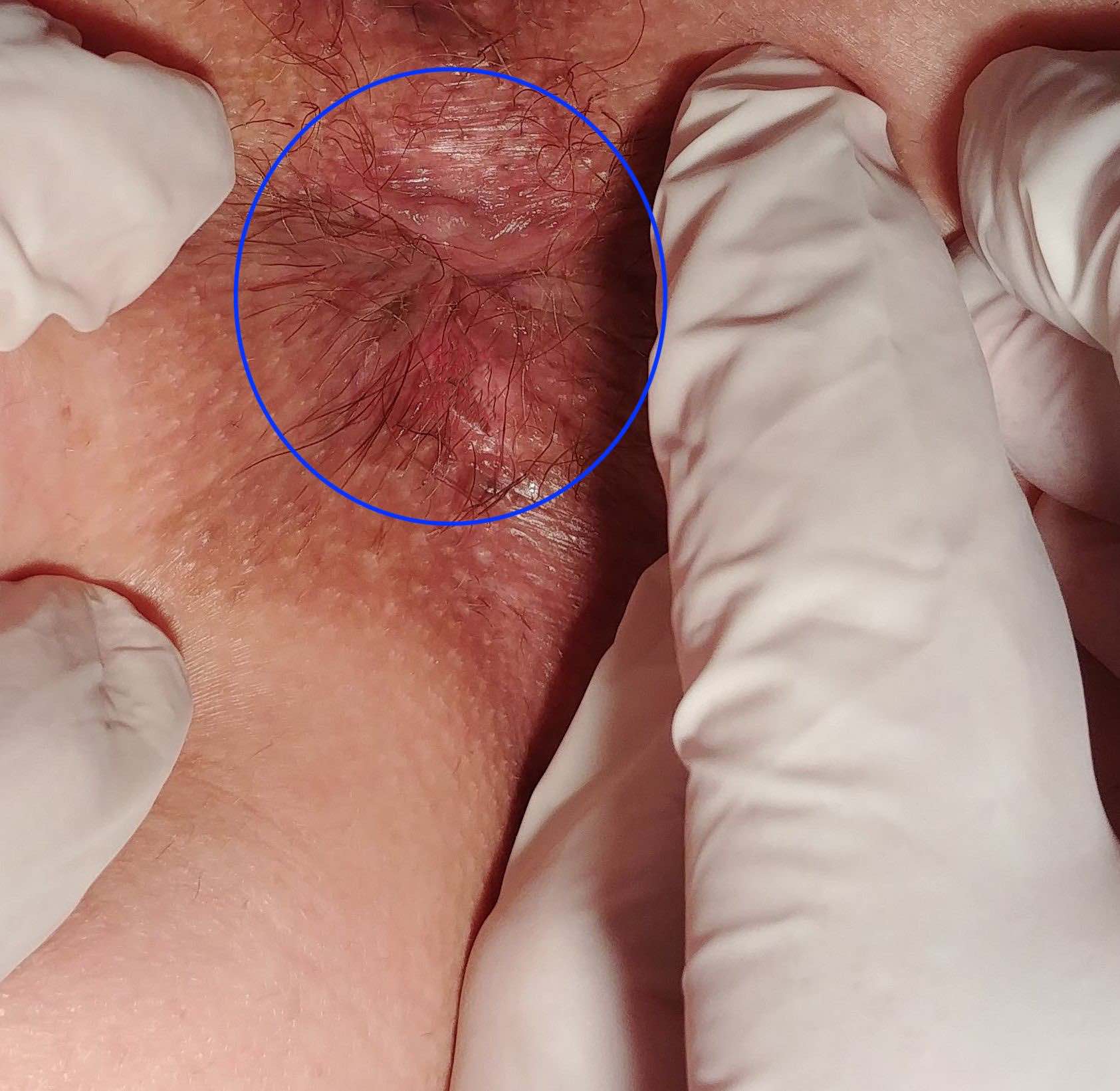
The LHP® laser Laser Hemorrhoidoplasty (LHP®) is the newest laser treatment for hemorrhoids. The operation is performed by a small incision of 1-2 mm in the protoderm from which the laser fiber is directed submucosally to the hemorrhoid and shrinks it. The procedure is the most painless.
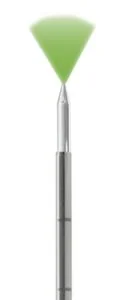
It is often combined with lifting of the rectal mucosa when prolapse is also present with the use of absorbable LHP®-RAR sutures (a technique we developed in our clinic). The relief from hemorrhoids is immediate and has the best results than the rest of the methods.
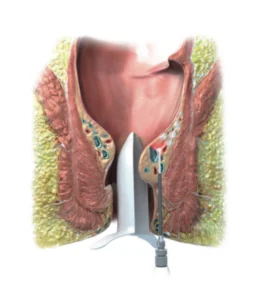
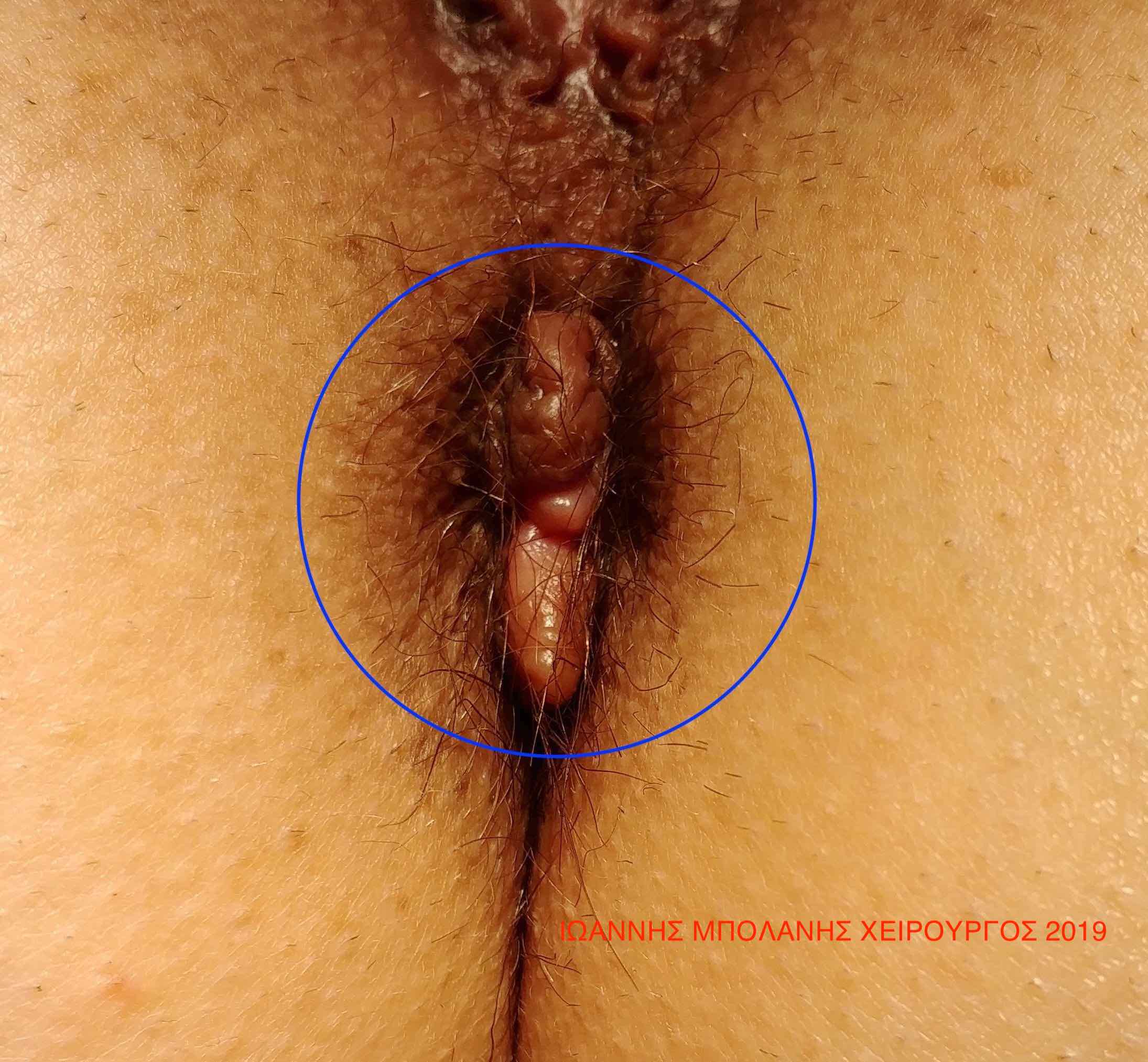
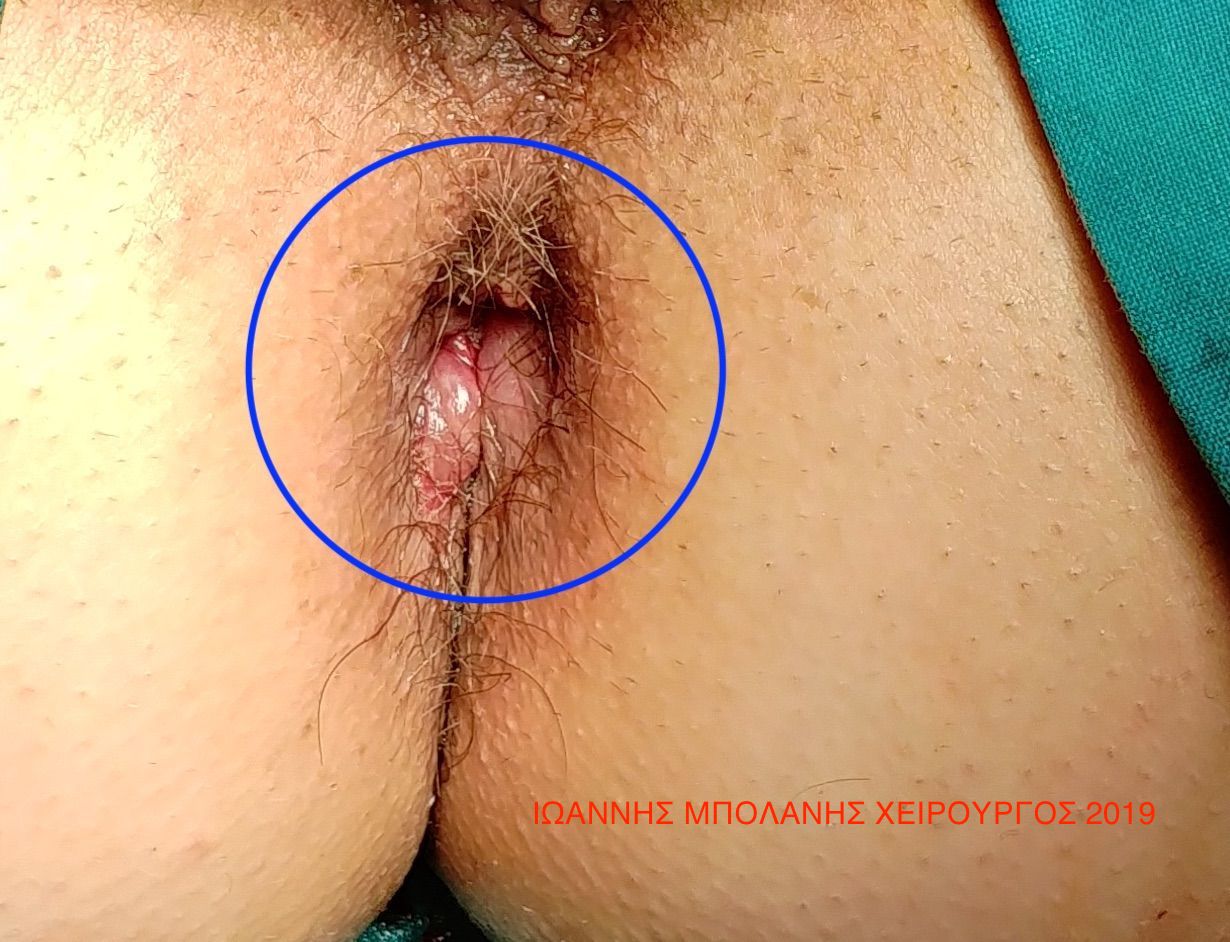
The operation lasts approximately 15-45' depending on the stage and it can be done with local anesthesia and discharge in a few hours. See an example. Read more...
2) Hemorrhoids treatment with laser and ultrasound, Help method
Another method using ultrasound and laser is the HeLP method (Hemorrhoid Laser Procedure). It is performed using a laser under ultrasound guidance. After locating the hemorrhoidal arteries, a special laser protocol is applied that interrupts the blood flow to the hemorrhoidal artery and causes tightening of the intestinal mucosa suffering from prolapse. The procedure is painless but seems to have poorer results in difficult cases and is usually recommended in mild 2nd And initially 3rd Degree cases.
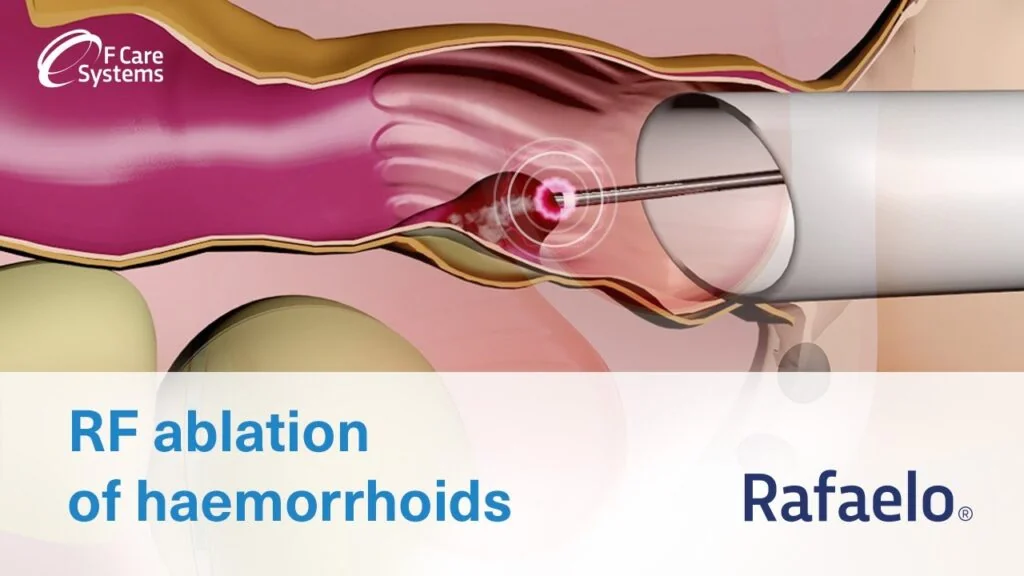
3) Hemorrhoids treatment with radio frequencies Rafaelo method
The Rafaelo method is considered a variation of the laser where instead of an optical fiber that emits light, a pin that emits radio waves is used. As a method it is less common than the laser and is considered a bit older than modern fiber optic lasers.
According to studies, the advantages of the laser method (LHP®) compared to radio frequencies (Rafaelo) include:
- Less pain
- Faster recovery
- Less chance of bleeding or other complications (eg perforation, fistula)
- Longer duration of effect
These advantages are due to the more targeted action of the laser on the tissues. The laser used in the LHP® method (laser Laser Hemorrhoidoplasty (LHP®)) has a wavelength of 1470 nm, which is selectively absorbed by the vessels. Instead, radio frequencies essentially cause a thermal burn (cautery) to the area, without targeting specific tissues and with a greater spread of energy.
4) Hemorrhoids treatment with ligation using ultrasound
The method ligature of Hemorrhoids arteries with the use of ultrasound (THD, HAL, Trilogy, Angiodin-procto) is applied both in cases of bleeding and prolapse of hemorrhoids. Although older than the laser plastic LHP® continues to be one of the best options and can be perfectly combined with the laser.
With this method, the blood vessels of the hemorrhoids are identified by ultrasound, which are ligated (sewn) with absorbable sutures. This cuts off the blood supply to the hemorrhoids, which gradually shrink. As soon as the blood supply to the hemorrhoids is interrupted, the bleeding stops immediately. If at the same time there is a prolapse, it is corrected with hemorrhoidopexy (anal lifting) which lifts and straightens the intestine, i.e. Suspending the hemorrhoids with the use of stitches in their normal position.
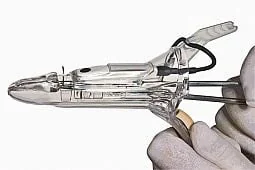
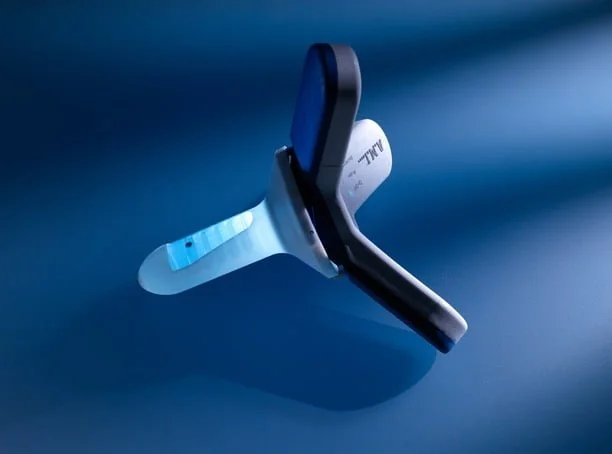
This operation does not require any incision and is quite painless. Post-operative results are excellent and leaves the sphincter and bowel intact. Complications that we rarely have with the other methods (stricture, incontinence, bleeding, etc.) are avoided with this method. It is one of the best options for the modern treatment of hemorrhoids along with the LHP® laser.
Cordless hemorrhoid ultrasound machines like the Trilogy Cordless are no different than corded ones. All meet the necessary specifications and it is purely a matter of preference of each surgeon. The operation lasts 30-45 minutes.
Hemorrhoids older methods of surgical treatment
Getting a little deeper into the technical details of the ultrasound method and LHP® laser Laser Hemorrhoidoplasty (LHP®), what gives them an advantage over older methods is that they are dynamic techniques that are done under constant monitoring. This means that the operation is done gradually where the surgeon at any time has full control and can reverse the procedure if necessary.
5) Bandage of Hemorrhoids
Hemorrhoid ligation is applied to first and second degree hemorrhoids. It can be done in the doctor's office where, using a special proctoscope, elastic rings are placed at the root of the hemorrhoid. With the bandaging, the blood supply to the hemorrhoid is interrupted, which atrophies. Although it is a relatively economical and simple method, it is only suitable for simple cases and its results are not good when there is prolapse. It can also present a rare complication of sepsis, as well as all the possible complications that other methods have, pain, bleeding, etc.
6) Longo's Resection Method
The rest of the techniques are what we call "irreversible". In the Longo method once the surgeon fires the machine which cuts and at the same time stitches the hemorrhoids there is no going back. What was removed cannot be restored and unfortunately at the time of firing we do not see what exactly is happening because the device interferes.
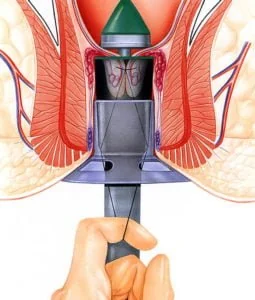
Finally, another important parameter is that with the Longo method, because it leaves permanent metal clips, it can create problems in future surgeries in the area. He may also experience chronic pain due to the clips and need a new operation to remove them. This is probably the method with the highest complication rates along with Milligan-Morgan although overall complication rates for hemorrhoid procedures remain low.
7) Milligan-Morgan Resection Method
In very advanced cases (grade 4 hemorrhoids) where fibrosis coexists and cannot return to their normal position, it is necessary to remove the hemorrhoids with the Milligan-Morgan operation. This operation leaves a traumatic surface and causes more intense postoperative pain for several days. The Ferguson variation reduces the area of the injured surface, speeds up healing and reduces pain.
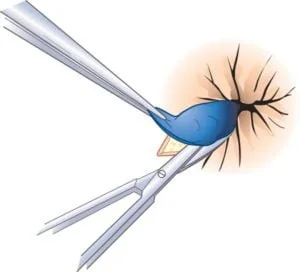
It is the operation that provides the best chance of a complete cure for grade 4 hemorrhoids with fibrosis. It can be done using modern machines such as laser, ultrasonic scissors (Ethicon) that replace the classic scalpel or scissors and offer some advantages. The method requires caution because it is difficult to correct any mistake, for example if we remove a large part of the hemorrhoids there is a risk of narrowing or damaging the sphincter.
8) Internal Lateral Sphincterotomy
In cases of severe hypertonicity of the sphincter, which is involved in the pathogenesis of hemorrhoids, medial lateral sphincterotomy is recommended alongside hemorrhoid surgery, which offers significant improvement. Caution, sphincterotomy should not be performed routinely in every hemorrhoid operation because it carries the risk of incontinence as described in more detail in the treatment of anal fissure anus. Typically a manometry test for sphincter hypertonicity must precede.
9) Hemorrhoids treatment by dilation of the ring with the hands (removed)
I must draw your attention to an old remedy for hemorrhoids and ringworm. Dilation of the annulus by hand, Peter Lord method, should be avoided as it can cause uncontrolled rupture of the sphincters resulting in incontinence which is very difficult to treat. Dilation of the ring must be done controlled with a balloon or candles and up to 4cm, but it is preferred as a treatment for other diseases such as strictures of the anus after operations or radiation as there are much superior in safety and effectiveness treatments for hemorrhoids as we described.
Conclusions on the treatment of hemorrhoids.
The Laser Laser Hemorrhoidoplasty (LHP®) LHP and the method ligature of Hemorrhoids arteries with use ultrasound (THD, HAL, trilogy) are the newest treatments for the disease.
They are considered the safest methods with the fewest complications, are minimally invasive and have minimal post-operative pain.
They are applied both in cases of bleeding and in cases where prolapse of the hemorrhoids coexists.
They are safe, painless and can be combined if needed.
Advantages of Laser – Ultrasound
In the last 5 years the Laser Laser Hemorrhoidoplasty (LHP®) is beginning to gain ground in relation to ultrasound ligation. They can deal with it Hemorrhoidal disease in all its stages, from the 1st to the 4th degree. The advantages they are:
- Minimal pain compared to other techniques
- Almost zero complication rates
- Dynamic correction of the problem according to the size of each hemorrhoid
- Respect the anatomy of the area (use of absorbable sutures)
- Can be applied to all ages as well as to people with incontinence
- They do not pose a problem in future operations in the area
- They prevent future recurrences as they treat both primary and secondary hemorrhoids
- They can correct problems and complications of previous hemorrhoid operations
- They treat both bleeding and prolapse of hemorrhoids
- They do not affect the sphincter, nor do they create a narrowing of the anus