
Hernia, inguinal hernia, umbilical hernia, postoperative hernia symptoms, diagnosis, treatment.
A hernia is usually easily recognized as it appears as a bulge somewhere in the abdomen. Modern surgery achieves minimization of pain and hernia recurrences by using tension free techniques and open or laparoscopic mesh.
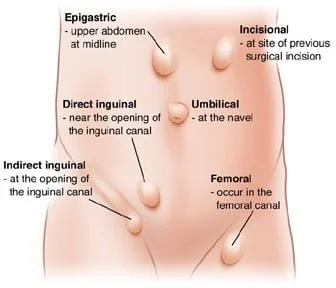
Abdominal Wall Hernias
Inguinal hernia, umbilical hernia, femoral hernia, postoperative hernia
These are the most common types of hernia, which we will talk about in detail below.
Hernia Introduction
Hernias are probably the most common benign condition that affects both sexes.
The most common hernias are:
- The inguinal hernia that appears as a soft swelling in the groin area (root of the thigh),
- The umbilical hernia that appears as a bulge in the navel area
- And postoperative hernias that occur after abdominal operations in the area of the incision (whether incision after open surgery or laparoscopic)
Definition of Hernia
A hernia is the projection of an internal organ or tissue through a natural or artificial opening (opening) in the body.
How do I know if I have a hernia?
It is usually easy to identify one hernia. It presents as a lump under the skin, which usually increases with coughing or lifting weights. This swelling can increase or decrease. It can disappear when we press it with the hand and it retracts while on the contrary it grows when we cough or lift weight. The symptoms usually caused by a hernia are heaviness, pain or a burning sensation in the area. When part of the intestine enters the hernia and tightens, we can have very strong pain, redness, inflammation, fever, which are symptoms that the intestine is burning and dying. See Photographs.
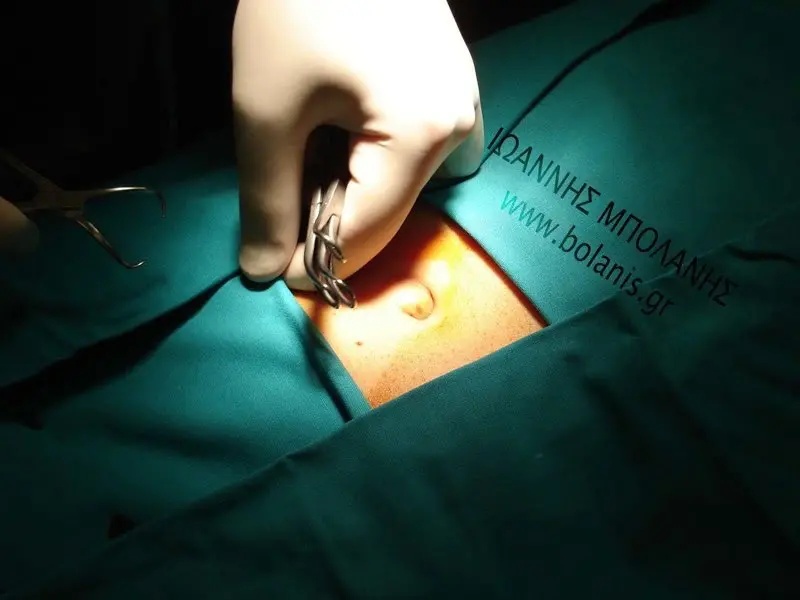
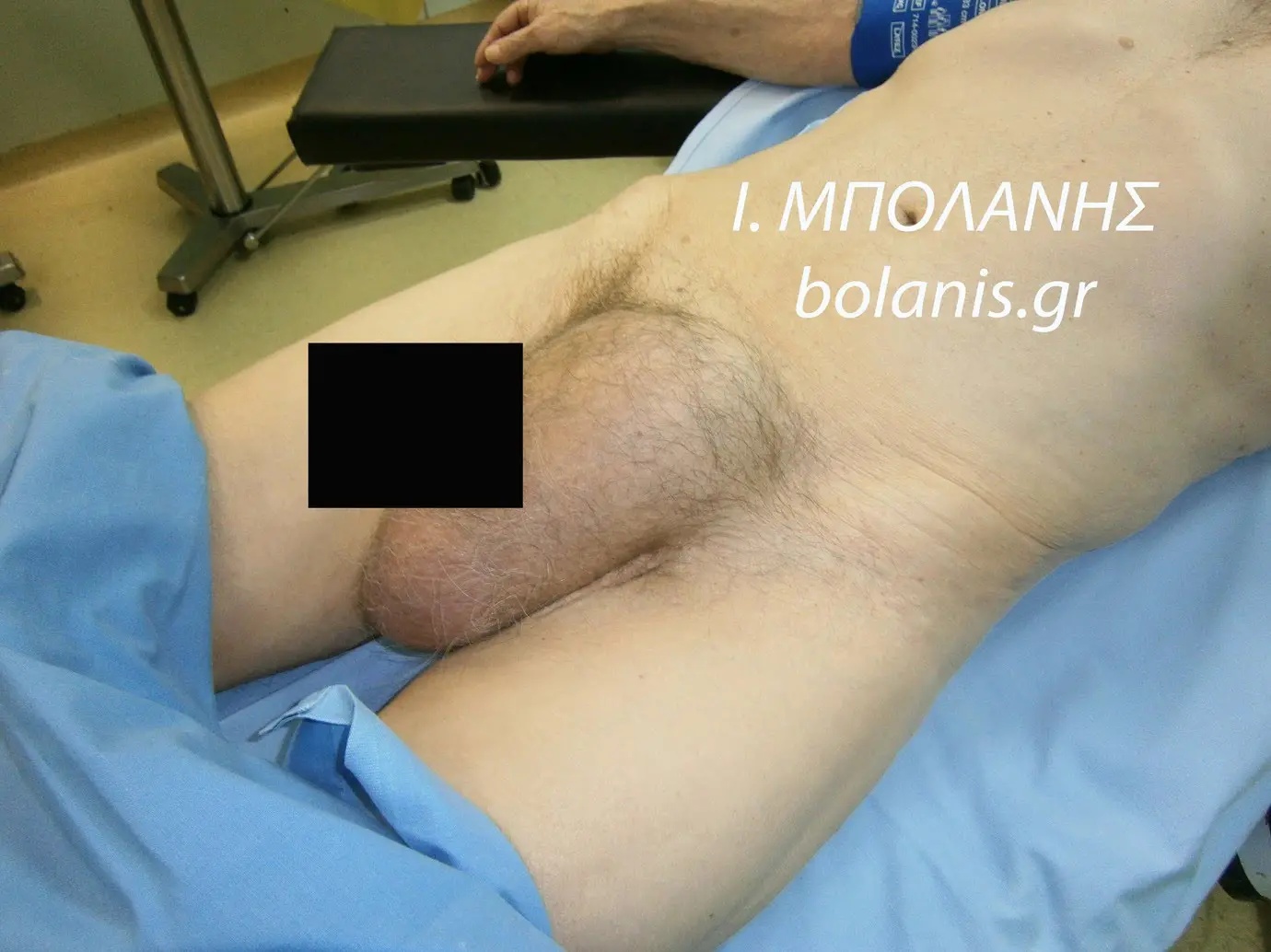
How is a hernia created?
- Hereditary factors: Poor convergence of normal foramina.
- Increased intra-abdominal pressure: Cough, constipation, obesity, difficulty urinating (eg prostatic hypertrophy), multiple pregnancies, heavy work, ascites.
- Injuries – Operations on the abdomen.
- Disorders of collagen: Elderly, malnutrition, vitamin C deficiency, smoking.
Classification of hernia based on clinical picture
- Simple or reversible hernia: The hernia (bulge) returns to its position automatically or after manipulation (light massage or kneading).
- Non-reversible hernia: The swelling does not return automatically or after manipulation. They are usually large chronic hernias and have an increased risk of stricture.
- Blocked: is n hernia containing helix of intestine minute or fat causing the intestine to become obstructed (careful without affecting the blood supply to the intestine). In this case we have symptoms ileum.
- Tightened: It is the hernia whose content is strangled and its blood supply is prevented, with the risk of necrosis. It is an emergency and must be treated within 6 hours. Its symptoms are usually characteristic, pain, hardness, redness and, of course, inability to withdraw. Possibly if we turn to an experienced surgeon in time to be able to remove the hernia and avoid emergency surgery and thus plan the operation under better conditions. Delayed withdrawal after several hours is contraindicated.
- Inflammatory hernia : When the contents of the hernia become inflamed, e.g. Appendix, fallopian tube
Classification of hernia based on location
1) Inguinal Hernia
Inguinal hernia is the most common hernia. Inguinal hernias make up 80% of hernias. They occur in 25% of men and 5% of women. Inguinal hernias are divided into straight and oblique depending on the location of the opening (mouth) in the groin. Oblique inguinal hernia is often congenital, occurs 20 times more often in men, is usually contralateral, and favors young ages < 35 years. Straight inguinal hernia is acquired, occurs at older ages and is often bilateral. There are also cases where oblique and straight inguinal hernias coexist and are called "pants-like" hernias. Inguinal hernias are one of the hernias that can present both tightening and obstruction of the intestine, which is why they must be corrected surgically. The inguinal hernia is the hernia with the most open and laparoscopic surgical techniques for which we will analyze the pros and cons below.
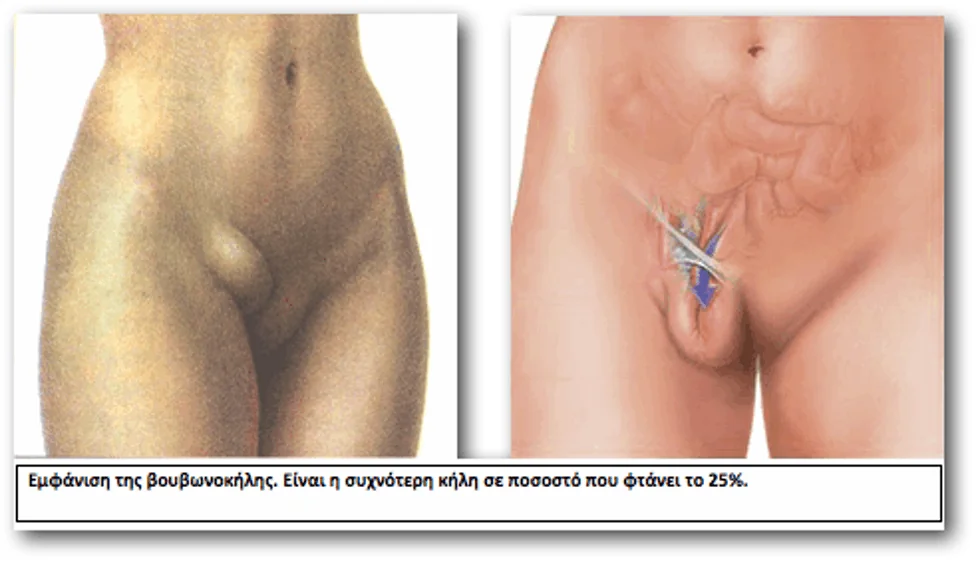
2) Femoral Hernia
They make up 10% of inguinal hernias. They are 5 times more common in women and tighten more often than all other types of hernia. Femoral hernia should be operated on immediately when diagnosed because of the high risk of stricture. It is located a little lower than the inguinal hernia.
Inguinal hernia and femoral hernias can be confused with hydrocele, seminal cyst, inguinal cryptorchidism, swollen lymph nodes, saphenous vein varices. Therefore we should not be complacent in thinking that a swelling of the area is just a hernia.
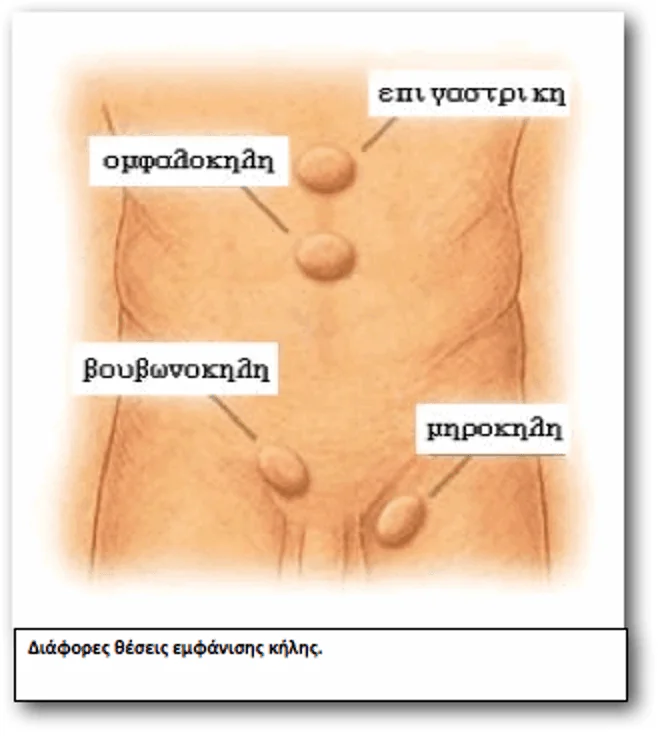
3) Umbilical Hernia
They are true in children because they are in the umbilical ring, in adults they are actually paraumbilical hernias because they are located slightly below or above the umbilical ring. In the majority of them they are cured automatically by the age of 6 years. They are rarely constricted and are up to 5 times more common in women. The content of these hernias is mainly the furniture, so even if a tightening occurs, it usually does not concern the intestine but only a part of the furniture* that is less dangerous. Small umbilical hernias are corrected very simply with a very small incision in the navel, large umbilical hernias we prefer laparoscopic correction.
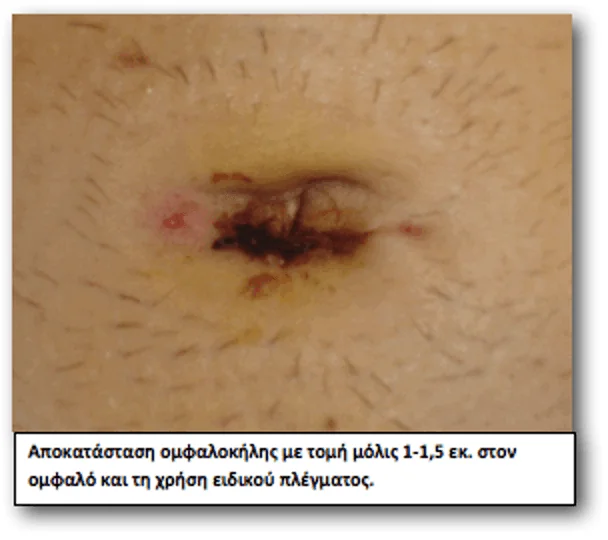
4) Epigastric hernias, white line hernia
They appear in the line between the xiphoid process of the sternum and the umbilicus and very rarely below the level of the umbilicus. Dilation of the white line is the increase in the distance between the two rectus abdominis muscles and occurs in elderly and pregnant women, it is not a true hernia and appears as an elongated swelling of the white line when the intra-abdominal pressure increases. It causes no symptoms or complications, and the reason for surgery is mainly cosmetic (surgery is usually not recommended). Epigastric hernia is not so common and is usually corrected laparoscopically as well as open.
5) Post-Operative Hernia, Abdominal Hernia
Second to inguinal hernia in frequency. They appear in incision sites after abdominal operations and their rate increases if there is a previous infection of the incision up to 30%. Postoperative hernias are repaired both laparoscopically and open. The selection of the appropriate operation is based mainly on the previous surgeries which may, due to adhesions or other reasons, make the laparoscopic method for the abdominal hernia prohibitive.
6) Athlete's Hernia
It is a syndrome characterized by chronic pain in the groin of athletes, mainly football players. The official existence of a hernia cannot be established during examination or radiologically. During the operation, injuries (tears, bruises) of the muscles and ligaments of the groin are usually found. The term "hernia" is used because the surgical treatment is similar to that of an inguinal hernia.
7) Hernia despite the stoma, hernia around colostomies or ileostomies
This is a special form hernia in patients who have undergone operations in intestine and have temporary or more commonly permanent stoma. The general symptoms and complications apply here as in all of them Hernias. In addition, however, there is the peculiarity that it is in direct contact with the intestine and this requires special attention so that no damage is done to the stoma during the operation. Also, the risk of contamination is much more immediate, especially in the case of using mesh.
Hernia Symptoms
You may feel pain when you lift heavy objects, when you cough or pull when urinating or defecating, or when you stand or sit for a long time.
The pain can be sharp or mild, which gets worse towards the end of the day and can be accompanied by a feeling of "burning" or "heaviness" in the area.
Severe, continuous pain, redness and tenderness are signs that the hernia may have tightened and you should contact your doctor urgently.
Complications of Hernia
- Pain
- Tightening
- Necrosis
- Ileus (bowel obstruction)
Treatment of Hernias
Most hernias require surgery, using one of the methods below. We are mainly referring to the inguinal hernia, which is also the most common.
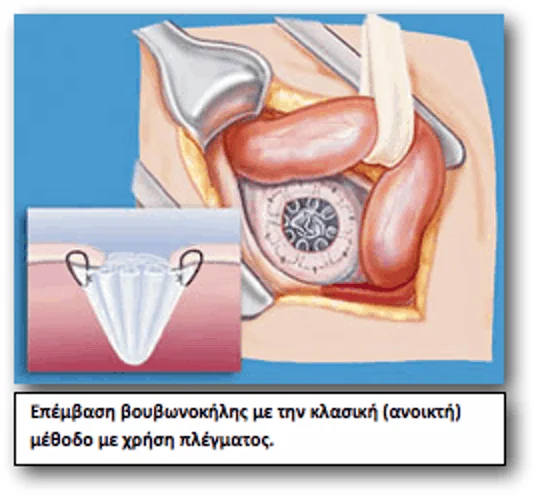
A) Classic (open) method (with or without mesh):
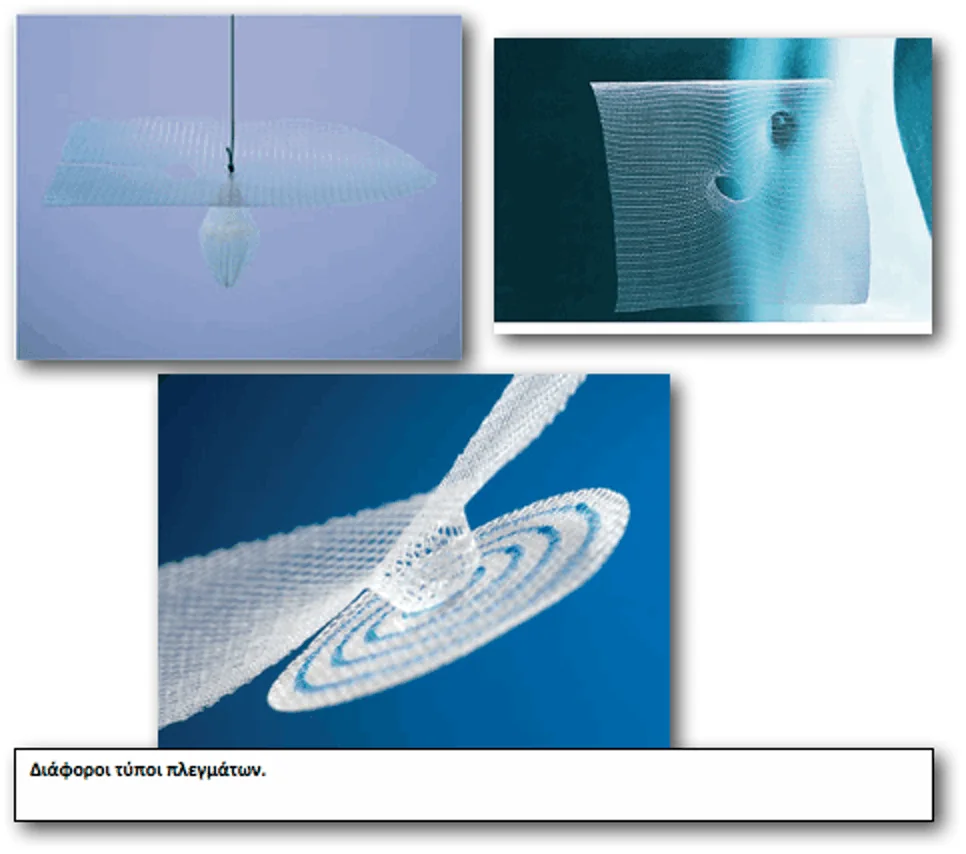
Open surgery is performed by making an incision in the area of the hernia and allows the surgeon to reach the level of the lesion from the outside. After the hernia is found, it is repaired either with only stitches or with the use of a mesh so as not to create tension in the area. Strain is the main reason for pain and recurrence for a hernia, so today the use of mesh is imperative to get excellent results. Mesh is now used in all hernias unless there are contraindications.
This method is done with general anesthesia but can also be done with epidural or local anesthesia.
Main advantages of the method:
- The most common method internationally
- The greatest security
- Rare and minor complications
- Shorter duration of surgery (30-45')
- Can be applied to all patients of any age
- It can be applied to patients with serious health problems because it is also done with local anesthesia
Disadvantages are likely to be:
- The aesthetic result (although today the incisions are small 4-5 cm in the bikini area and plastic stitching is done)
- More intense postoperative pain in the first days
B) Laparoscopic Method:
The laparoscopic method is performed with 3-4 small incisions and again the hernia is found from its inner side and here a mesh is necessarily used that is stabilized with stitches or clips. This operation is performed under general anesthesia. Especially for the inguinal hernia there are two variations, TAPP (TRANSABDOMINAL PREPERITONEAL) and TEP (TOTALLY EXTRAPERITONEAL), for the rest of the hernias only the first method applies.
Its main advantage laparoscopic it is
- The reduced pain
- And the aesthetic result (incision in the navel 1-2cm and 2 incisions 0.5cm in the abdomen)
Disadvantages are
- Slightly higher recurrence rate
- Not done with local anesthesia
- Relative contraindication in the very elderly or with serious health problems
- It cannot be applied if there have been previous operations in the abdominal area or in large complex hernias
- The complications, although rare, can be much more serious than the open one (there is a risk of injury to the intestine, vessels, bladder)
- May make future prostate surgery difficult
- Slightly longer duration of surgery (45-60') and higher cost
An important observation is that in the classical method the mesh is placed outside the abdomen, while in the laparoscopic method it is inserted from the inside. This implies that in the first technique the complications and their treatment are done outside the abdomen and away from its organs, while in the second method they will have to be treated from inside the abdomen. Therefore, each method must be used based on its indications and always expecting the best results for the specific patient.
As far as inguinal hernia is concerned, open and laparoscopic surgery equally have their usefulness and their indications. As a general rule, we choose the method that will offer the best therapeutic effect in combination with the best aesthetic. For example, in inguinal hernia where the incision is small and hidden, most operations internationally are performed open, if the inguinal hernia is bilateral (right and left) we prefer the laparoscopic method if we want to do them at the same time, also if it is a recurrence after open we prefer the laparoscopic and vice versa. Conversely, in abdominal hernias, when possible, we prefer laparoscopic surgery to avoid large visible incisions.
General Information
The hospital stay depends on the type of hernia and the patient's other problems. Small inguinal hernias, femoral hernias, umbilical hernias are removed the same day, while larger hernias are hospitalized from one to more days.
Returning to work is possible after a few days depending on the type of work, usually 1-4 weeks for full recovery.
The onset of fever and increasing pain are possible indications that there is a complication and your surgeon should be informed.
*Epiloun = fatty membrane (peritoneum) that covers the abdominal organs.