Ulcerative colitis, treatment without a permanent stoma (permanent colostomy)
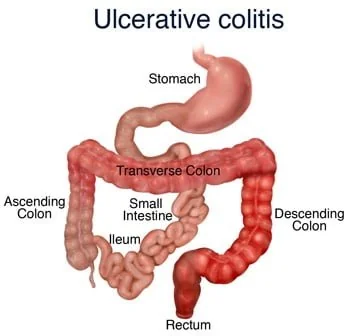
The ulcerative colitis is an inflammatory disease that affects the large intestine. We apply specialized surgical treatment without a permanent stoma, J-Pouch method.
Ulcerative colitis is not contagious, nor is it a form of cancer, it is an autoimmune reaction of the body that gradually destroys the intestinal wall. To date, no definitive medical treatment has been found for ulcerative colitis, but surgical removal of the entire large intestine (colon) provides a definitive cure. This is also the important difference from Crohn's disease which, because it is not located only in one part of the gastrointestinal tract, there is no radical surgical treatment.
When is ulcerative colitis surgery necessary?
About one in four patients with Ulcerative Colitis will need surgery. The possibility of surgery is greater for patients with extensive colitis. There are many reasons why it may be necessary to remove the entire colon:
1) Non-Response to drug therapy or severe side effects of drugs
Ulcerative colitis is usually treated with medication, but if medications can't control symptoms or severe side effects occur, surgery may be necessary. If bowel function seriously disrupts a person's daily activities, surgery can improve their quality of life.
2) Urgent problems (Acute ulcerative colitis)
Ulcerative colitis sometimes causes an acute illness with symptoms of severe diarrhea with bleeding, weight loss, general weakness, dehydration and fever. About 2/3 of patients will respond to medication. The operation becomes necessary in the event that there is no immediate response to the drugs, since the chances of complications increase. Acute complications (potentially fatal) requiring urgent surgical treatment are bleeding, acute toxic distension (toxic megacolon) and bowel perforation.
3) Failure to grow or gain weight (children)
In children, active ulcerative colitis can affect their growth and ability to gain normal height and weight. In addition to the symptoms that also occur in adults, this is an additional reason to decide to operate on children.
4) Colorectal Cancer
Cancer is a rare development of ulcerative colitis. However, the risk increases when the disease is extensive (pancolitis) for more than 10 years and is up to 30 times greater than in the normal population.
Frequent follow-up with a colonoscopy can identify pre-cancerous conditions (dysplasias) in the lining of the large intestine, in which case surgery is recommended.
Ulcerative Colitis Operations.
1) Colectomy with ileostomy and preservation of the rectal stump (hyphal colectomy)
A critically ill patient with severe inflammation may need emergency surgery to remove most of the large intestine (hepatic colectomy). The rectum (terminal end of the colon) remains and is usually placed on the surface of the skin (mucosal fistula). In addition, an ileostomy is created, i.e. The end of the small intestine is placed on the surface of the skin in order to expel faeces.
This operation can be reversed (bowel reattachment) in those who wish to do so and are fit, either by ileorectal anastomosis or by creating a loop.
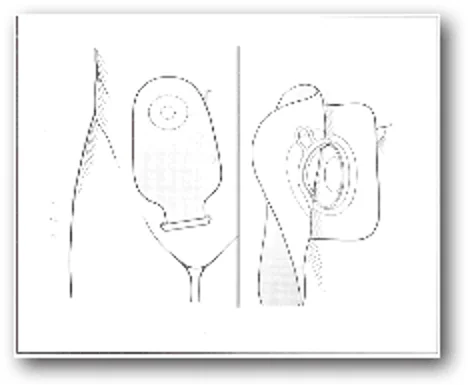
2) Proctocolectomy and creation of a permanent ileostomy
In this operation, the entire colon, rectum and anus are removed along with the sphincter, and a permanent ileostomy is created. This type of ileostomy is not reversible and is an option that can be made by patients who are sure that they do not want or are not suitable for ileostomy.
3)Lecito-anal anastomosis (procedure of choice)
This operation involves removing the entire colon (large intestine) and rectum, but leaving the anus and the muscles that surround it. The lower end of the small intestine (ileum) is used to form a jejunum (J-Pouch reservoir). The lekythos is connected to the anus and acts as a substitute for the removed rectum. A temporary ileostomy is made to divert the stool out of the newly-formed ileus and give it a chance to heal before coming into contact with the contents of the bowel.
Attention! Many surgeons claim that they do a lapidary operation, but in reality they leave a large part of the rectum (>5cm, i.e. They do a hyphal instead of a total colectomy) and join it with the small intestine. This operation has nothing to do with the normal ileoanal anastomosis operation, where it has two variants:
- Or almost the entire rectum is removed (except for 1-3 cm) double-stapling technique – in this case, the small remnant of the rectal mucosa must be checked annually by rectoscopy
- Or all the rectum with the mucosa and anastomosis of the pouch onto the annulus with manual suturing (this method is especially preferred when there is dysplasia or cancer) – operation video.
Closure of the temporary ileostomy is a relatively minor operation which is usually performed three months later.
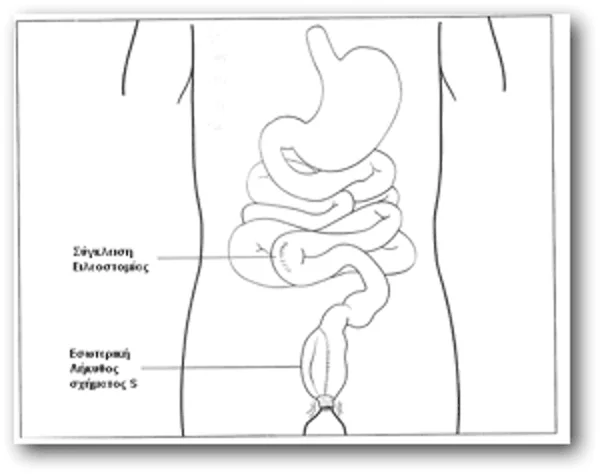
The operation is usually performed in two stages.
In the first stage, the colon and rectum are removed, the ileum is created and joined to the anus, and a temporary ileostomy is performed.
In the second stage, the ileostomy is closed.
4) Colectomy and ileorectal anastomosis (Double stapling)
This operation is only suitable for a small number of people with Ulcerative Colitis, with little or no inflammation in the rectum. The colon is removed and the ileum (the lower part of the small intestine) is joined directly to the rectum.
The rectum continues to be responsible for Ulcerative Colitis flare-ups and dysplasias (pre-cancerous changes). Consequently, patients undergoing this operation will need to continue to be monitored by the gastroenterologist. The "secret" in this operation is not to leave the entire rectum ~15cm but as small a part as possible to limit the complications of the disease.
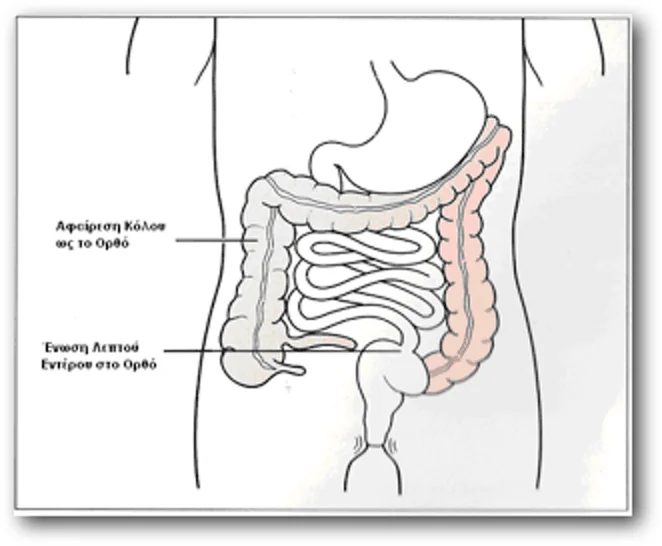
Complications of operations for ulcerative colitis.
1) Inflammation
The intestine contains large amounts of bacteria and an inflammation is not uncommon after surgery. The inflammation can occur in the incision or inside the abdomen, a rarer but more serious case. If the anastomosis (joining) of the intestine does not heal, the contents of the intestine can pass into the abdomen and cause peritonitis.
2) Adhesions
The adhesions are bundles of connective tissue that appear after surgery. Parts of the intestine can become stuck to each other or to other parts of the abdomen, and an obstruction occurs if any part of the intestine becomes trapped or twisted. Symptoms of an intestinal obstruction (ileus) are pain (pain), swelling and vomiting. Adhesion problems may occur in 10-20% of patients operated for ulcerative colitis but usually these go away on their own and it is not necessary to have another operation.
3) Pouchitis
Patients with ileo-anal prolapse often suffer from a condition called prolapse, in which the inner wall of the prolapse becomes inflamed. Symptoms include diarrhea (sometimes with blood), a feeling of needing to empty your bowels, and abdominal pain. Lekythitis affects one in three lekythous patients. It usually goes away with an antibiotic (Ciproxin, Flagyl) and sometimes cortisone.
4) Ileostomies
Ileostomies can also present complications. A prolapse may occur, or sometimes the opening created in the abdominal wall widens and herniates next to the ileostomy. Skin rashes and irritation around it may also appear.
5) Pelvic Nerves
Nerves related to the bladder and sexual function in men are located near the rectum and can be injured. Nerve damage can lead to difficulty urinating or impotence problems which are usually temporary and improve over time. Women face the same low risk of bladder problems but report no changes in sexual function.
6) Fertility
The operation does not significantly affect male fertility. In women, any surgery on the pelvis can create adhesions with the ovaries and fallopian tubes, resulting in reduced fertility. This problem is treated by using anti-adhesion membranes and gels around the ovaries.
Factors influencing the decision to operate in ulcerative colitis.
The most common choice is between a permanent ileostomy or the creation of a pouch ileanal anastomosis. The advantage of the latter is that a permanent ileostomy is avoided and is the operation of choice. However, because it is technically extremely demanding, it is only performed by a few specialized surgeons.
In the case of J-Pouch ileanal anastomosis, many factors must be considered:
- It is inappropriate if the anal sphincter (the muscle that controls defecation) is weak.
- Ulcerative colitis can be difficult to distinguish from Crohn's disease of the colon (indeterminate colitis), and up to 10% of patients thought to have ulcerative colitis eventually turn out to have Crohn's disease. Lecithin ileal anastomosis is not usually an option for Crohn's patients because of the high failure rate.
- Obesity – the operation is technically more difficult and may become impossible if the patient is overweight (especially in men).
- Age – there is no set age limit, but the results of ilecoanal anastomosis may not be as satisfactory in older people.
- Bowel function – although permanent ileostomy is avoided, ileus anastomosis does not restore normal bowel function. The average frequency is 4-7 bowel movements per day and about 50% of patients need to get up during the night. This is the same as the average frequency that an ileostomy bag will need to be emptied.
- The potential for complications is slightly higher after ileo-anal anastomosis with ilekythe than after a permanent ileostomy.
- Almost 10% of ileostomy becomes useless within a decade and it may be necessary to remove the ileus and create a permanent ileostomy. An additional 20% of patients will continue to experience bowel function problems.
Despite the potential drawbacks, most patients who choose either procedure feel that their quality of life is much better than when they had Ulcerative Colitis. Especially the ileo-anal anastomosis with a pouch offers an almost normal intestinal function with a very good quality of life.
The Association of People with Crohn's Disease and Ulcerative Colitis of Attica and Northern Greece can offer practical advice and support to people with IBD. Read the book.