
Anal fissure treatment without the risk of incontinence
Anal Fissure, treatment without surgery and without risk of incontinence. We can achieve results similar to sphincterotomy in anal fissure without causing incontinence by using botulinum toxin (botox). Botox treatment can be done in the doctor's office within minutes. In chronic anal fissures, an operation is performed with Laser and Botox with local anesthesia without the need for hospitalization.
Anal Fissure Treatment with Botox
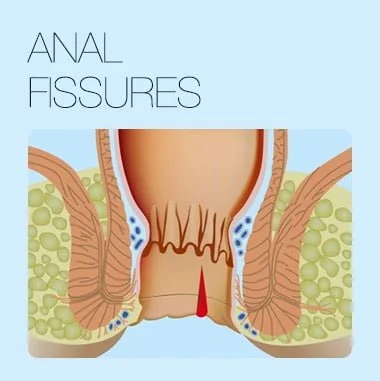
A new treatment for anal fissures that can achieve similar results to surgery is using botox.
Botox, known from its use in plastic surgery, causes temporary local relaxation of the sphincter, helping to eliminate pain and heal anal fissures. Its action lasts 3-6 months and is reversible so there is no risk of complications such as mild incontinence that occurs after operations, it is essentially a chemical sphincterotomy which is reversible and does not damage the sphincter.
It can be applied in the doctor's office with local anesthesia and achieves the healing of anal fissures in 80% of cases.
Botox is injected into the sphincter area, it is painless and its action lasts for a long time, which is enough to heal the anal fissure. The pain from anal fissures usually disappears 3-5 days after the injection and therefore the daily use of ointments and painkillers is not necessary.
Anal fissure treatment with Botox laser.
In more chronic or difficult cases the combination of laser with botox achieves the best results. The use of the laser stimulates the regeneration and healing of anal fissures and in combination with botox manages to treat and heal even the most difficult anal fissures without the need for sphincterotomy.
The method is applied to chronic anal fissures, recurrence of anal fissures after conservative treatment and recurrence after older methods such as expansion and sphincterotomy. In particular after dilatation and sphincterotomy these techniques are not allowed to be repeated because they affect the sphincter and increase incontinence rates.
The laser-botox method can be repeated in already operated patients without the risk of complications or incontinence.
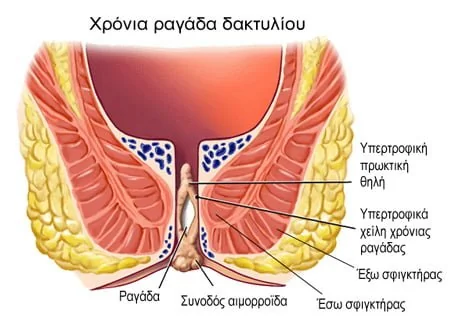
Anal fissure in general.
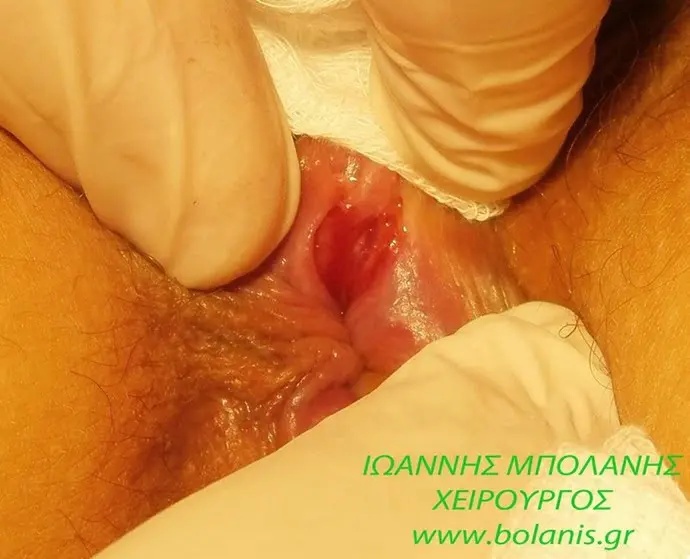
The anal fissure anus ring is a fairly common disease. Saying anal fissure we mean a tearing of his skin anus. So it is a wound in his area clamp usually backwards. Often its depth is sufficient to show the fibers of the media clamp muscle
Anal fissures are considered acute when they exist for less than 6 weeks, while after 6 weeks they are considered chronic. Visually, an acute anal fissure differs from a chronic one as it has a more vivid red color without evidence of incomplete healing such as the accompanying (sentinel) hemorrhoid and presents more intense pain. Although there are no exact statistics for anal fissures at least one in five people will develop them during their lifetime.
Anal fissure etiology.
Fissure of the anal ring most often occurs in people who suffer from constipation, where the hard stool creates a wound in the area, but it can also be caused by a diarrheal syndrome due to the many bowel movements.
In cases where the anal fissures appear without any obvious cause, an investigation should be carried out for inflammatory diseases, e.g. Crohn's disease, ulcerative colitis.
The most frequent location of anal fissures or anal fissures is the back and this is due to the reduced blood supply and muscle support of the area. Over time, a hypertrophic skin fold (guard hemorrhoid) develops on the outside of the Anal fissure and an anal papilla on the inside as a result of the chronic effort to heal.
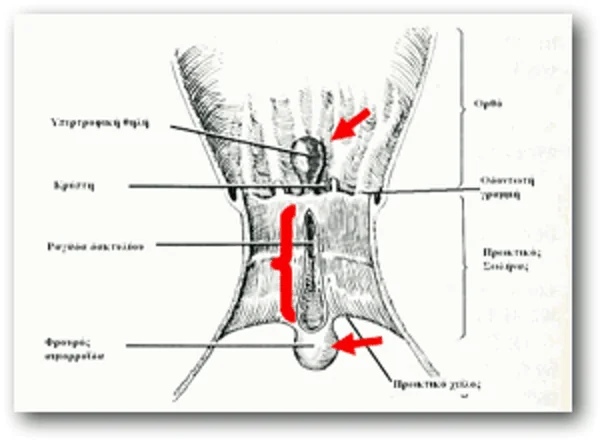
Anal fissure symptoms.
The main and characteristic symptoms are pain and blood loss. The pain is sharp and strong, occurs during bowel movements and usually lasts a few minutes. A second wave of pain often occurs shortly after a bowel movement that lasts for several hours. The blood is a small amount and mainly we see it only on the paper and not in the pelvis as it often appears in hemorrhoids.
Sometimes we may notice mucus loss and itching in chronic cases.
Grooved ring examination.
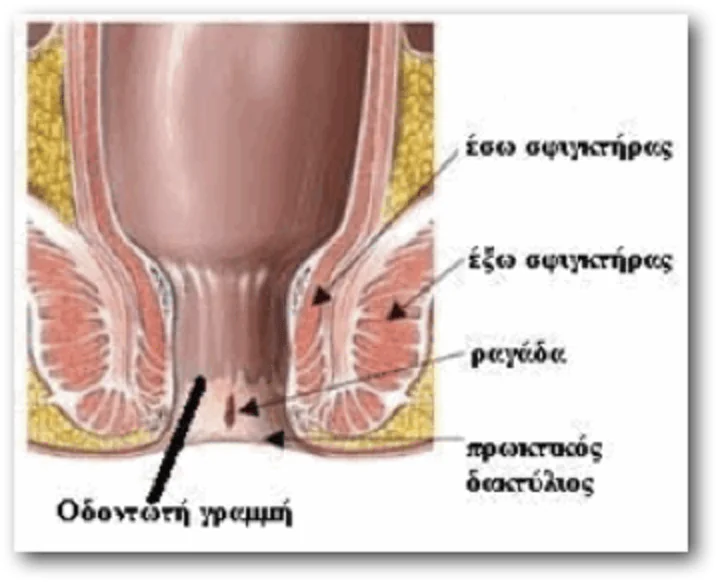
An anal anal fissure is strongly suspected by the patient's history and confirmed by rectal examination. Digital examination of an acute fissure is painful and should be avoided. Often anal fissure coexists with hypertonia of the sphincter (not relaxed) which is recognized during the examination of the patient, but when there is no hypertonia it is good to perform a manometry before choosing the appropriate surgical intervention. Control of the sphincter is vital in women and especially multiparous women as an operation on a muscle already strained by childbirth can lead to incontinence.
Anal fissure treatment.
Her treatment anal fissures (ring) when it is recent it is done with conservative measures. Saying conservative treatment we mean the avoidance of surgical intervention.
Conservative treatment of anal fissure.
Treatment with Ointments
Therefore, in the acute phase, we recommend that the patient have soft and bulky stools, which practically means adding vegetable fibers and liquids to his diet, while he can be helped by the use of drugs that facilitate emptying (paraffin oil). The area should be kept clean by washing with water but without abusing the use of soap and toilet paper.
Hydro-baths (we sit for 10-15 minutes in warm water, not hot) relieve pain by resolving the spasm of the sphincter and improve blood supply and healing of the wound (anal fissure). Finally, ointments such as Emla and Xylocaine that act locally by anesthetizing the area during and after bowel movements reduce the pain of anal fissures and indirectly speed up healing.
However, in addition to the classic treatment we mentioned, there are also some newer drugs that perform the so-called chemical sphincterotomy. These are glycerine trinitrate ointment ( Rectogesic ) which relaxes the internal sphincter and relieves pain. The main side effect is headache. Also related substances with similar effects are nifedipine and diltiazem ointment. The three substances above are known from their use in cardiology and there are also their usual side effects, drop in pressure, hot flashes, headaches.
Botox Botulinum Toxin Treatment
An even newer substance well known from its use in plastic surgery is Botox toxin (Botox or Dysport) which causes paralysis of the sphincter resulting in the disappearance of pain and improvement of blood supply in its area Anal fissure resulting in faster healing. Like all medicines it has some side effects, one of them is allergy and temporary incontinence, which however reverses when the effect of the substance wears off, and both are extremely rare side effects. Botox (50 iu) is injected into the sphincter area and its effect is for 3-6 months.
The success rates of conservative treatments reach 80%.
Surgical Treatment of Anal Fissure
If medical treatment fails, we are led to surgical treatment.
Laser fissurectomy + Botox (rejuvenation + Botox)
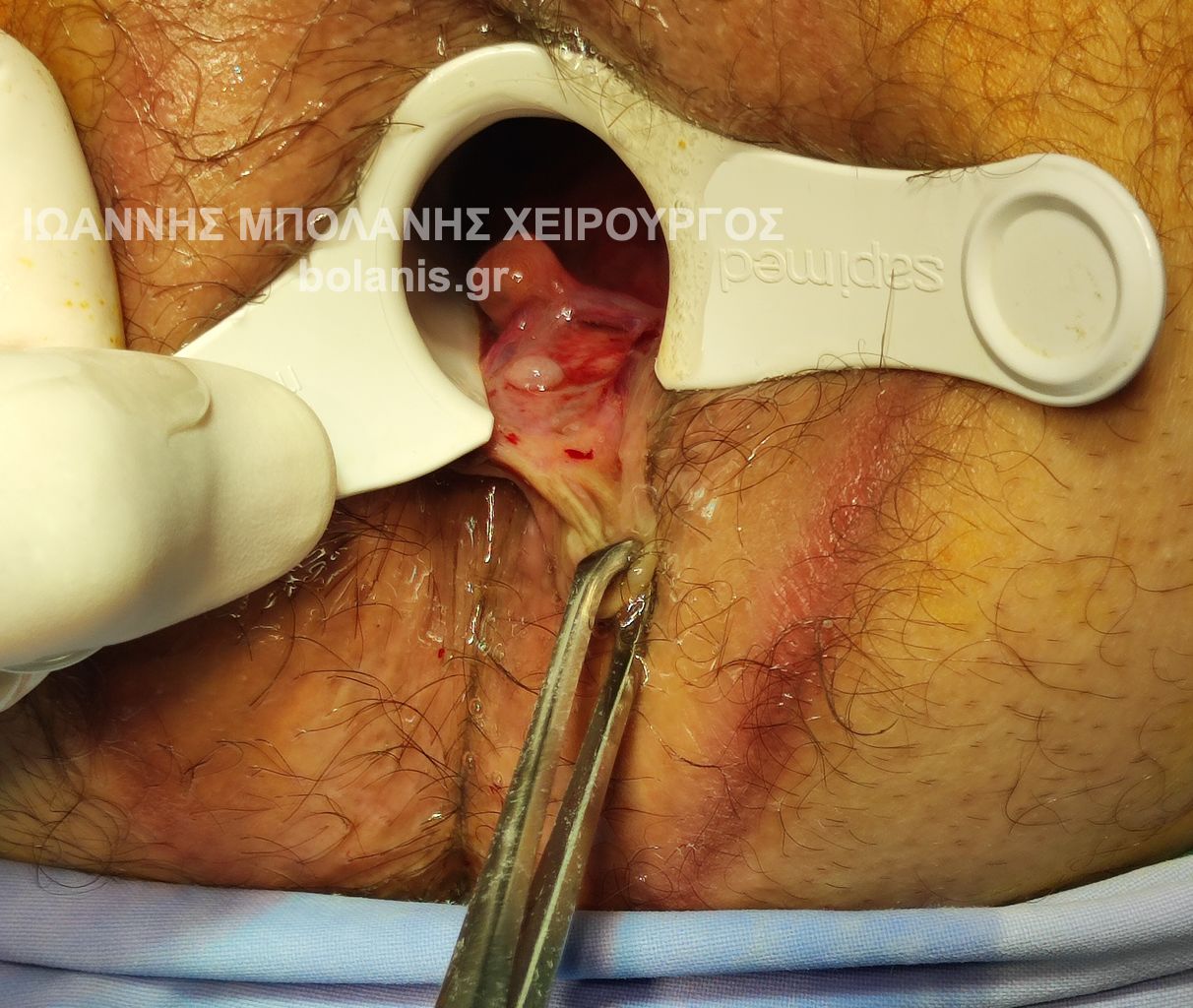
Another method is to rejuvenate and surgically clean the anal fissure using laser or RF +/- Botox. This technique is constantly gaining ground abroad as it does not affect the sphincter and especially when combined with botox it achieves treatment rates similar to sphincterotomy but without the risk of incontinence. It is preferred as the first choice in acute and chronic fissures, while for difficult cases such as chronic recurrent fissures, the flap or sphincterotomy is also chosen.
Advancement Flap
In difficult cases where other operations have preceded (dilatation, sphincterotomy) and there is a strong risk of incontinence, techniques are applied using a graft (mucosa and/or skin flap) and plastic reconstruction of the Anal fissure area is performed without burdening the sphincter.
Internal Lateral Sphincterotomy
The most widely used technique in chronic or recurrent fissures is the medial lateral sphincterotomy in which a small incision is made in the medial sphincter up to 50% of its width. The length of the sphincterotomy is usually proportional to the size of the tear, but it should not exceed the border of the dentate line. The success rate of the operation ranges from 90-95%, however complications such as ecchymosis, bleeding (rare) and incontinence (at a rate of 10-15%) are not absent.
Sphincterotomy can be done with the open technique in which an incision is made and sutures are placed, or with the closed technique through a tiny hole. It can also be small or large depending on the length of the sphincter we cut and the percentage of relaxation we want to achieve. By increasing the size of the sphincterotomy we increase the treatment rates and also the possibility of incontinence.
Dilation (Deprecated)
The first method applied to the treatment of anal fissures was dilatation (Peter Lord method) which today has been abolished due to the severe incontinence it created especially in women from the abnormal rupture of the sphincter.
The expansion when applied must be controlled up to 4 cm in diameter using a special balloon or expander and not with the fingers, and after the sphincter has been previously assessed with manometry and ultrasound.
Unfortunately, even today it is applied by some surgeons and even at extreme dilation values of 8-10cm (6-8 fingers) with serious incontinence problems in the patients. The phenomena of incontinence after dilatation usually do not appear immediately but after the age of 60 and are particularly intense in women who have a weaker sphincter which is also burdened by normal deliveries.
Ring dilatation is preferred as a treatment for other conditions such as strictures of the anus after surgery or radiation as there are far superior in safety and effectiveness treatments for fissures as we have described.
Anal fissure conclusion.
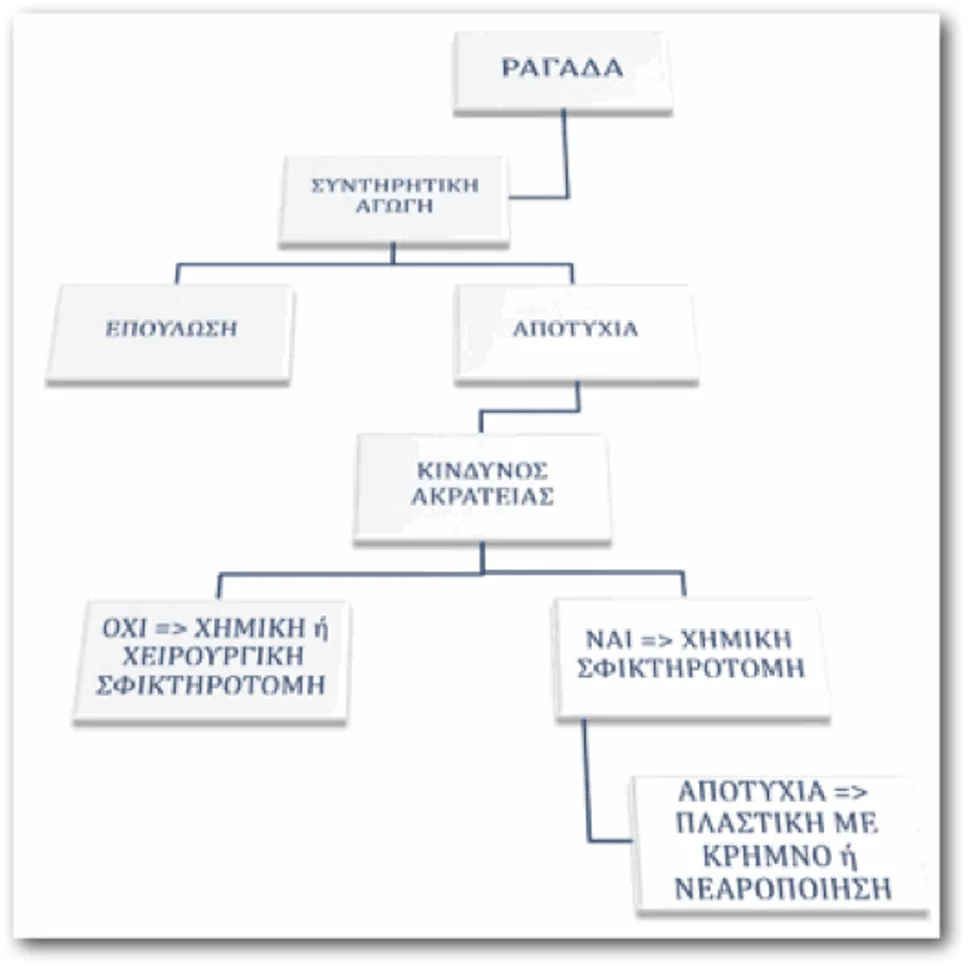
The treatment of anal fissures is a challenge for both the patient and the physician. Conservative treatment is longer and delays pain relief, while surgical treatment immediately improves symptoms, but there is a risk of incontinence, especially in women.
The decision must be made after informing the patient and when necessary a laboratory test to clarify the state of the sphincter with manometry and endoscopic ultrasound. A total of 80% of patients improve with conservative treatment and only 20% end up in surgery.
The operation of first choice internationally is rejuvenation and surgical cleaning of the anal fissure using laser or RF (radio waves) +/- botox, while in cases of recurrence, sphincterotomy or grafting is preferred.