
Intestinal Polyp
Bowel polyps definition.
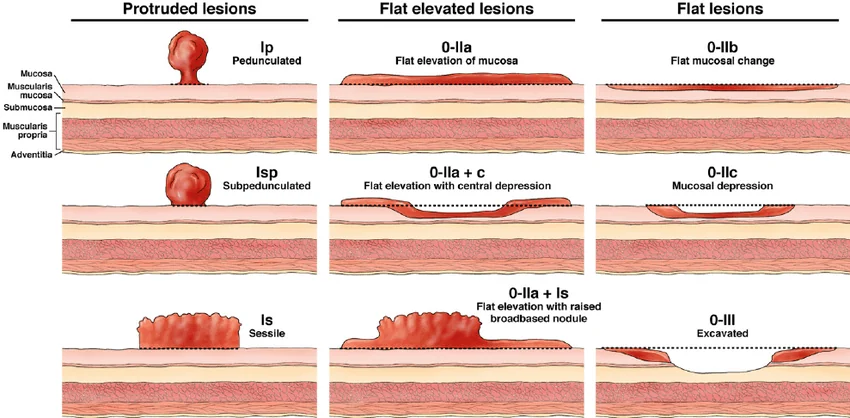
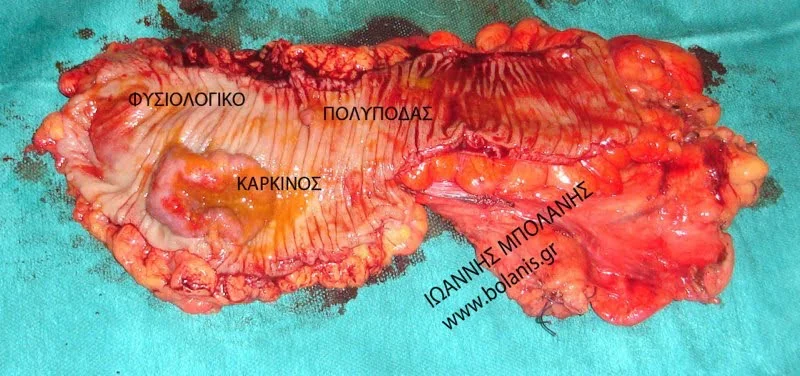
Intestinal polyp is a projection in the lumen of the intestine that stands out from the flat mucosa. A polyp in the intestine can be benign or malignant. Colon polyps are classified according to various criteria such as:
- The histological composition of adenomatous, hyperplastic, serrated, hamartomatous, inflammatory pseudopolyps.
- The size small, large (>1cm) intestinal polyps
- Shape flat, sessile, sessile, submucous, sunken
- Submucosal tumors can be distinguished into lipomas, leiomyomas, hemangiomas, carcinoids, etc.
Colon polyp symptoms.
In most cases, bowel polyps cause no symptoms and are usually found incidentally during a colonoscopy.
However, if a polyp in the bowel does develop symptoms, they may include:
- Blood in the stool or bleeding from the rectum
- Pain, diarrhea, or constipation that lasts more than a week
- Nausea or vomiting if you have a large polyp causing a blockage (ileum)
When colon polyps are detected in the early stages, they can be safely removed during a colonoscopy.
Removing polyps reduces the risk of growth colon cancer.
Factors that increase the likelihood of intestinal polyps.
There are some factors that can increase the risk of colon polyps and they include:
- Age over 50 years
- Obesity
- Hereditary history of colon polyps or cancer
- History of polyps in the past
- History of ovarian or uterine cancer before age 50
- Inflammatory bowel diseases, such as Crohn's disease or ulcerative colitis
- Type 2 diabetes
- Hereditary syndromes such as familial polyposis FAP, the syndrome Lynch or Gardner syndrome
Lifestyle that contributes to the development of polyp in the intestine includes:
- Smoking
- Frequent alcohol consumption
- Sedentary life
- High fat diet
If you make changes to your lifestyle you can reduce your risk of colon polyps.
Factors that reduce the likelihood of bowel polyps.
Maintaining a healthy diet can help prevent the development of colon polyps.
This includes eating more fruits, vegetables, whole grains and lean meats, increasing your intake of vitamin D and calcium.
Foods that are rich in vitamin D and calcium include:
- Broccoli
- Yogurt, milk, cheese
- Eggs
- Liver
- Fish
You can further reduce your risk of colon polyps by reducing your intake of high-fat foods, red meat, and processed foods (canned foods, foods with preservatives).
Quitting smoking and exercising also help prevent the development of polyps in the bowel.
How is bowel polyp diagnosed?
Colonoscopy: The examination is done under sedation and uses a camera attached to a thin, flexible tube that enters the intestine through the anus. With this method, the doctor sees the rectum and colon and if a polyp is detected, he can immediately remove it or take a biopsy. It is the most specific examination for the intestine, but requires taking a laxative so that the intestine is clean and the examination is successful.
Recto-Sigmoidoscopy: This test method is similar to a colonoscopy, but can only be used to see the rectum and part of the sigmoid as no laxative is taken, only an enema is given. In practice, only the final part of the large intestine is checked.
Barium enema: For this test, the doctor fills the intestine with barium in the form of an enema and takes x-rays and/or fluoroscopy. Barium makes the bowel appear white on images, and if polyps are present they appear as dark deficits. The method does not easily detect small polyps.
CT colonoscopy: This method uses a CT scan to make images of the colon and rectum. After the scan, a computer combines the images to produce a 3D visualization of the intestine. CT colonoscopy is also called CT colonography or virtual colonoscopy.
Stool test: A stool sample is taken for analysis for possible microscopic bleeding. This test will show if you have blood in your stool so you should then have one of the previous tests.
How is bowel polyp treated?
The best way to treat a bowel polyp is to remove it.
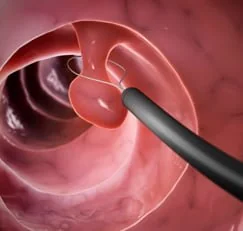
The doctor (gastroenterologist) usually removes the polyps during the colonoscopy. Polyps are sent for a biopsy and examined under a microscope to see what type of polyp they are and if cancer cells are present. Some Highly specialized gastroenterologists manage to remove endoscopically with special techniques (ESD) large or difficult polyps further reducing the need for surgery.
However, surgery may be needed to remove polyps if they are large and cannot be removed during a colonoscopy or if there is malignancy (cancer). In most cases, this can be done with laparoscopic surgery, or transanal endoscopic microsurgery (TEM – TAMIS) which are minimally invasive methods.