
Pilonidal sinus / Cyst symptoms and laser treatment
New minimally invasive techniques in the pilonidal sinus / cyst painless and with rapid healing. The new generation of lasers with a flexible optical fiber specially designed for the pilonidal sinus, it comes to offer new possibilities with the method Filac (or SiLaC), without incisions and the need for daily wound changes. The operation lasts 20-30' and does not require general anesthesia. The patient takes discharge in 1-2 hours. The healing time is almost half that of the classic open resection of the pilonidal sinus. Also, the new method offers faster recovery, little to no pain and allows an immediate return to our everyday life.
Pilonidal sinus / Cyst definition.
Pilonidal sinus / cyst is a common problem especially in young men with increased hair growth. It is an inflammation in the midline between the buttocks above the lower part of the spine in the area of the coccyx (sacrococcyx bone). The incidence of pilonidal sinus / cyst is about 30 per 100,000 and is 2.5 times more common in men. The usual age of onset is adolescence with a peak at 21 years. Apart from gender and hair growth, other aggravating factors are sedentary life, obesity and general conditions that increase pressure and friction in the area.
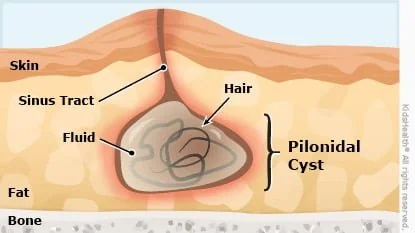
How is the pilonidal sinus / Cyst created?
Regarding the pathogenesis of the pilonidal sinus / cyst (or follicular fistula) it is usually created by infiltration of hair into the skin or may be due to a residual cyst from fetal life. These are the most important theories, but they do not explain all cases and as it has been proven, only in 50% of cases we find hair inside the cyst.
Symptoms of pilonidal sinus / Cyst.
The onset of the condition can be with mild symptoms to a severe clinical picture. In mild cases we simply notice an enlarged duct (fistula) in the area that may occasionally produce some serous to bloody fluid. In moderate-weight cysts, we palpate a swelling in the area that can sometimes be sensitive, painful and secrete fluid. In the most severe forms, we have the image of an abscess, i.e. A painful swelling, red and warm, with pus production (usually foul-smelling) and rarely fever. The last two cases may be accompanied by multiple fistula openings.
Complications and diagnosis of pilonidal sinus.
Complications are very rare and concern neglected cases, in which case systemic symptoms may appear, i.e. Generalized infection or in chronic forms the possibility of skin cancer increases.
Sometimes other diseases of the area can be confused with it bladder coccyx in these cases it is important not to misdiagnose. Such are the periodic abscess when you exit from the posterior region of the anus, the periodic fistula, hidroadenitis and other rarer diseases. Especially for perianal abscess and fistula, attention is needed because the surgical treatment is different and damage to the sphincter may occur, resulting in incontinence.
Treatment – Treatment of pilonidal sinus / Cyst.
Correct treatment of the condition requires classifying the patient in the appropriate category.
A) The lightest forms pilonidal sinus / cyst without symptoms they do not need surgical treatment except for cosmetic or preventive reasons.
B) We divide the more severe cases into two categories: Those that appear acutely for the first time and chronic recurring ones.
Acute Form
I) When the pilonidal sinus becomes inflamed for the first time and has formed an abscess cavity or fistula, the treatment is immediate surgical drainage of the abscess and opening of the fistulas with accompanying cleaning of the granulomatous tissue and any hairs. The surrounding area should be kept clean and shaved weekly or lasered until healing is complete. After immediate treatment, most patients do not relapse and do not need further treatment.
Chronic Form
II) Coccygeal cyst recurrences and chronic cases need definitive surgical treatment. There are four main surgical methods, open, closed, semi-closed and flap plastic and two minimally invasive laser FiLaC® and endoscopic E.P.Si.T. The most frequently used methods are open, semi-closed and laser as they have the best results. In recent years the two minimally invasive techniques have been added to the new generation flexible laser is our first choice for the uncomplicated pilonidal sinus / cyst.
Pilonidal sinus / Cyst treatment with classic surgery
1) Open Method
In the open method, after both the cyst and the fistulas are outlined and mapped, they are completely removed and the area is left to close on its own for a secondary purpose. Depending on the extent of the operated lesion, healing lasts from 8-20 weeks. Regular changes of the wound, washing and depilation of the area with a razor or laser are needed. The use of RF (radio waves) or laser instead of the classic scalpel helps in faster healing and mainly in reduced postoperative pain. Pilonidal sinus / cyst recurrence rates range from 1-3%.
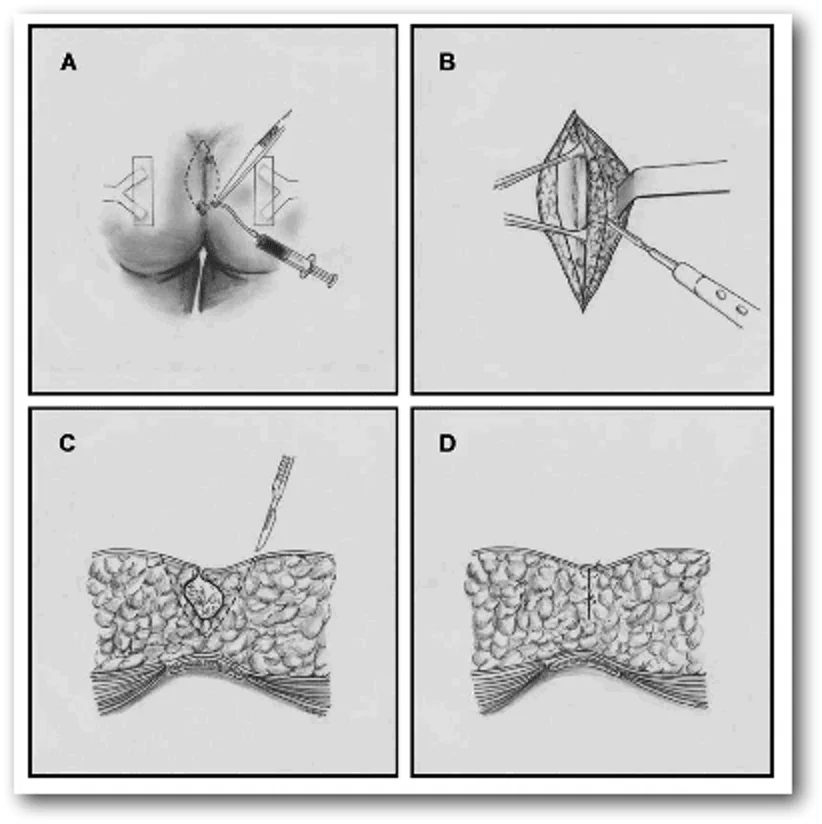
2) Semi-Closed Method
The semi-closed method is a combination of the open and the closed technique, achieving the fastest healing (3-7 weeks) that the closed method has with the low recurrence rates (2-4%) of the open method. The difference from the open one is that the edges of the incision converge towards the middle of the wound reducing the space that needs to heal without closing it completely as in the closed method.
3) Closed Method
Closed surgery is generally avoided because recurrence rates are high (10-30%) due to frequent infection especially in obese and smokers. It is selectively recommended in some cases where either the size of the hairless pilonidal sinus / cyst is small or for practical reasons the area cannot be left open or the necessary wound changes can be made.
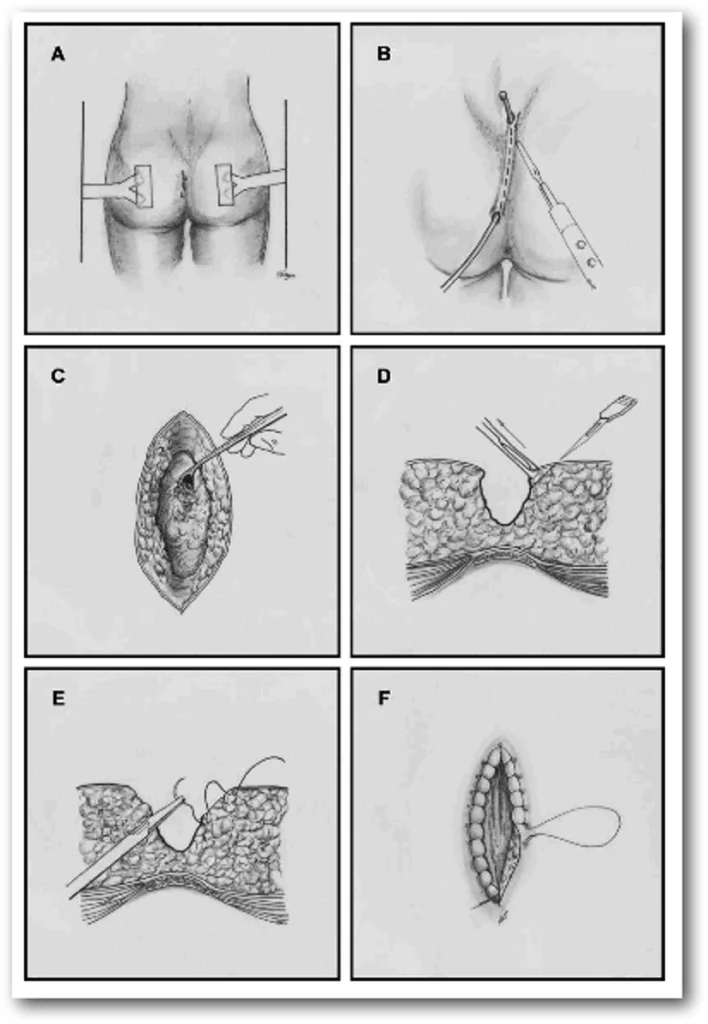
4) Plastic with Flap
Regarding plastics using flaps, they are more complex and time-consuming techniques with higher rates of complications and usually require a few days of hospitalization. In practice they are equivalent to wound closure in the first instance as is the closed technique. There is rarely an indication for their use. Among the plastic ones with a flap, it is worth distinguishing Karydakis method which has the best functional and aesthetic results compared to other plastics. It is used in difficult cases of pilonidal sinus, such as recurrences, multiple fistulas and large ones.
Although it is a simple condition and there are already several treatments, research continues for new forms of treatment with the aim of faster healing, elimination of relapses and the quick return of the patient to his daily life. I will simply mention two interesting still experimental treatments using phenol and a special biological cola.
Pilonidal sinus / Cyst treatment with minimally invasive surgery
1) Pilonidal sinus / Cyst laser treatment FiLaC® or SiLaT method
The newest and most modern treatment is FiLaC (SiLaT) which is done using the latest generation laser probe. The method uses a new generation laser with a flexible optical fiber and the ability to emit circularly instead of just straight like older lasers. Using the very thin and flexible laser probe, we cauterize the cyst cavity and the fistulas.
This is a new method with excellent results when used correctly in selected cases. The method is similar to that used in perianal fistulas where it was first used and from there it got the name FiLaC® and then it was also applied to fistulas of the pilonidal sinus so it was called SiLaT. The flexible laser method is currently the first choice for simple pilonidal sinus / cyst.
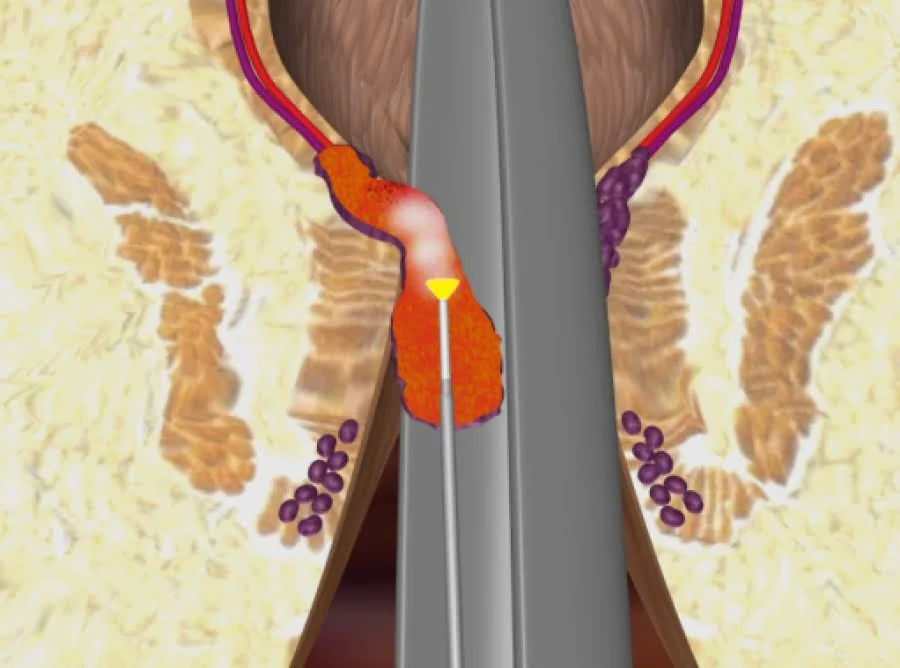
The stages of the operation are as follows:
- Cleansing and removal of skin fistulas
- Cleaning the cavity of the pilonidal sinus
- Laser cauterization of fistulas and cysts.
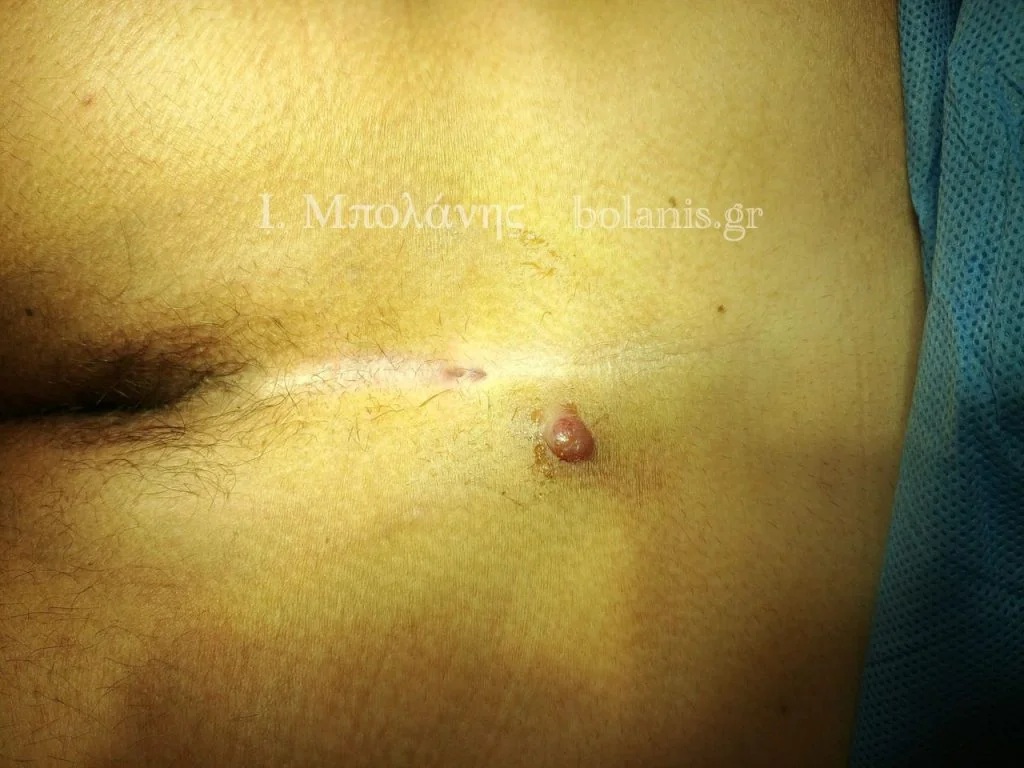
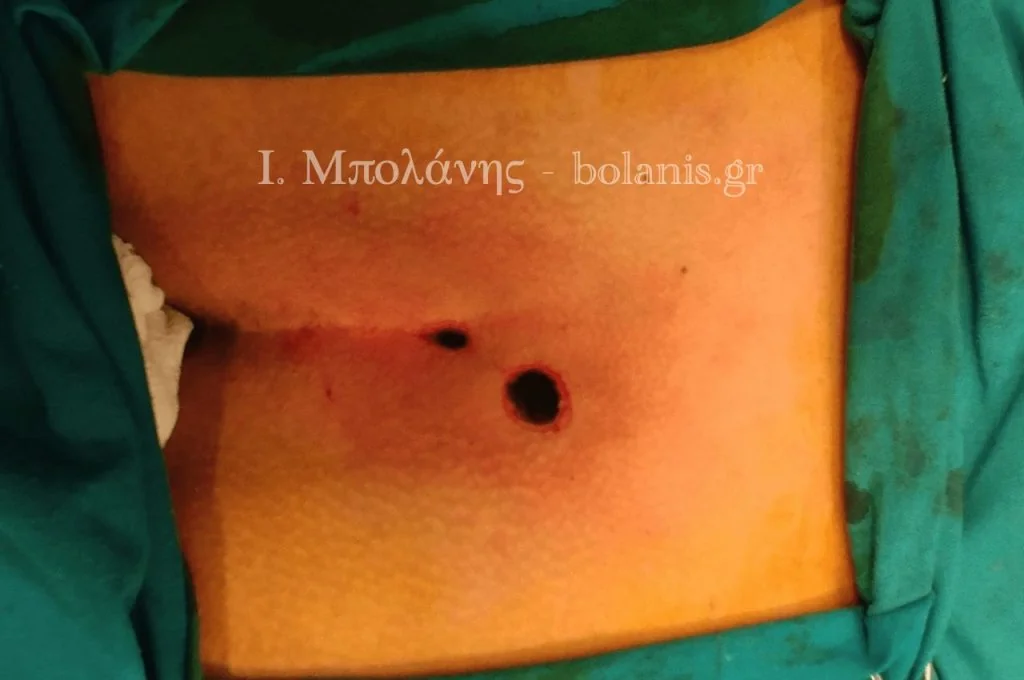
The laser operation can be done under intoxication and local anesthesia, it takes about 30 minutes and the patient is discharged in 1-2 hours. There is no need for painful changes, simply washing the area and checking by the attending surgeon. Healing is much faster than other techniques and the results are excellent both surgically and aesthetically.
2) Endoscopic Method
A new method started in 2012 in Italy by Piercarlo Meinero, M.D is the endoscopic treatment of the pilonidal sinus / cyst E.P.Si.T method. This technique uses special equipment with a camera and special tools to clean the area of the coccyx. The necessary equipment is available in our hospital. Due to the high cost of the equipment and difficulty in application the E.P.Si.T method has not found wide acceptance in contrast to the laser FiLaC® technique mentioned below which is the best choice in uncomplicated coccyx.
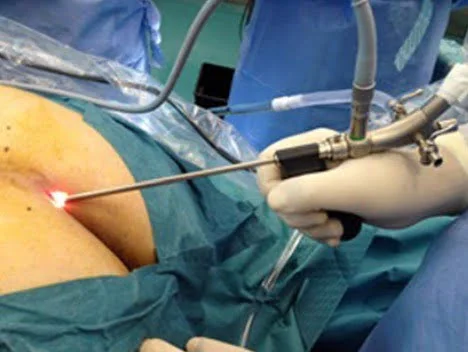
Both E.P.Si.T and FiLaC® should be used in the simplest cases, while in complicated pilonidal sinuses / cysts classical surgery and mainly flap techniques should be preferred.
Pilonidal sinus / Cyst classic surgery.
The operation can be done under local anesthesia or even general when it comes to large cysts. If you are taking medicines you should tell your surgeon who will tell you if you need to stop some of them.
The hospital stay is usually a few hours. Gauzes are removed after 48 hours and sutures after 2 weeks. Returning to work is possible after a few days depending on the type of work.
Care of the area is needed which can easily be done by the patient after removing the gauze. The doctor monitors the healing progress weekly.
Pilonidal sinus / Cyst conclusions.
In the open method, after both the cyst and the fistulas are outlined and mapped, they are completely removed and the area is left to close on its own for a secondary purpose. Depending on the extent of the pilonidal sinus, healing takes from 8-20 weeks. Regular changes of the wound, washing and depilation of the area with a razor or laser are needed. The use of RF or laser (laser) instead of the classic scalpel helps in faster healing and mainly in reduced post-operative pain. Cyst recurrence rates range from 1-3%.
The closed method is generally avoided because recurrence rates are high (10-30%) due to frequent contamination especially in obese and smokers. It is selectively recommended in some cases where either the size of the cyst is small or for practical reasons the area cannot be left open or the necessary wound changes can be made.
E.P.Si.T and FiLaC® are two new minimally invasive methods used mainly in the simplest cases, while classical surgery is preferred in complicated pilonidal sinuses / cysts.
The FiLaC® method using the new generation laser is the best option today for the uncomplicated pilonidal sinus / cyst.